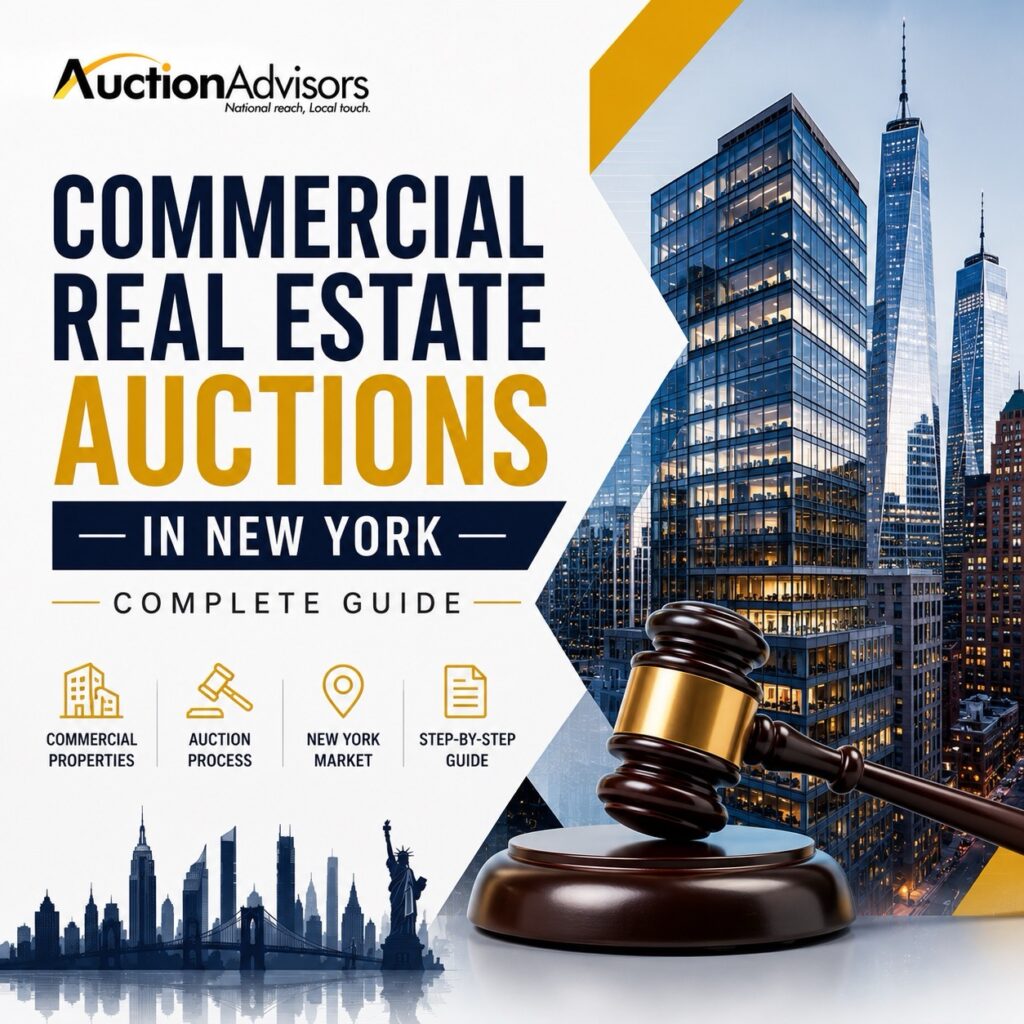
Commercial real estate transactions in New York are often complex, high-value, and time-sensitive. Traditionally, these properties have been sold through brokerage channels involving extended negotiations, multiple stakeholders, and long closing timelines. However, the rise of the commercial real estate auction model has introduced a faster, more structured, and increasingly popular alternative for both buyers and sellers in NYC.
A real estate auction in New York allows commercial property owners to bring assets to market in a competitive bidding environment, where pricing is determined by demand rather than prolonged negotiations. This approach is particularly effective in dynamic markets like New York, where investment activity, market cycles, and capital availability can change quickly. Auctions create urgency, attract qualified investors, and provide a transparent mechanism for price discovery.
Firms like specialize in managing property auction New York transactions, including commercial assets such as office buildings, retail spaces, mixed-use properties, and development sites. Understanding how commercial auctions work, their advantages, and how to participate effectively is essential for anyone involved in this segment of the real estate market.
1. What Is a Commercial Real Estate Auction?
A commercial real estate auction is a sales process where income-producing or investment properties are sold through competitive bidding rather than traditional negotiation. These auctions can involve various property types, including office buildings, retail centers, industrial facilities, multifamily properties, and mixed-use developments.
Unlike residential auctions, commercial auctions often involve more complex financial and operational considerations. Buyers are typically investors, developers, or institutional participants who evaluate assets based on income potential, market conditions, and long-term value. The auction process allows these participants to compete openly, creating a market-driven pricing environment.
In a real estate auction NYC, the seller establishes the terms in advance, including deposit requirements, timelines, and conditions of sale. Buyers must review these terms and complete due diligence before bidding. The structured nature of the process ensures efficiency and reduces uncertainty compared to traditional transactions.
Commercial auctions are particularly useful for properties that benefit from competitive interest, such as high-demand investment assets or properties requiring repositioning. This method provides a streamlined path to sale while maintaining flexibility in pricing strategy.
2. Types of Commercial Properties Sold at Auction
Commercial real estate auctions in New York cover a wide range of asset classes, each with its own characteristics and investment considerations. Understanding these property types helps buyers and sellers determine whether an auction is the right approach.
Common Commercial Property Types:
- Office buildings and corporate spaces
- Retail storefronts and shopping centers
- Industrial warehouses and logistics facilities
- Multifamily rental properties
- Mixed-use developments
Specialized Auction Opportunities:
- Distressed or underperforming assets
- Development sites with zoning potential
- Investment portfolios
- Unique or niche commercial properties
In a property auction in New York, the diversity of available assets allows investors to explore opportunities across different sectors. For example, a retail property may be evaluated based on foot traffic and tenant mix, while an industrial property may be assessed based on logistics and location advantages.
Platforms like these provide access to a variety of auction properties for sale, including commercial listings that may not be widely available through traditional channels. This variety makes auctions an important marketplace for commercial real estate transactions in NYC.
3. How Commercial Real Estate Auctions Work
The process of a commercial real estate auction follows a structured sequence designed to maximize efficiency and participation. It begins with property preparation and marketing, followed by buyer registration, due diligence, bidding, and closing.
During the marketing phase, the property is presented to potential buyers through targeted campaigns. This includes detailed information about the asset, such as financial performance, tenant leases, operating expenses, and market positioning. Buyers are given access to this information to conduct their analysis before the auction.
Once the auction begins, bidders compete in real time, either online or in person. The highest bidder typically wins, subject to the auction terms. The process is transparent, allowing participants to see competing bids and adjust their strategies accordingly.
After the auction, the winning bidder proceeds to contract execution and closing within a defined timeframe. This streamlined approach reduces delays and provides certainty for both parties. Compared to traditional transactions, auctions offer a more efficient path to completing commercial real estate deals.
4. Benefits of Commercial Real Estate Auctions for Sellers
Sellers of commercial properties are increasingly turning to auctions due to the advantages they offer in terms of speed, exposure, and pricing efficiency. In a market like New York, where competition is strong, these benefits can be significant.
Key Benefits for Sellers:
- Faster sales timelines compared to brokerage listings
- Competitive bidding that can drive higher pricing
- Reduced reliance on prolonged negotiations
- Clear and defined transaction process
Additional Advantages:
- Access to a broader pool of investors
- Increased visibility through targeted marketing
- Ability to set terms and conditions in advance
A real estate auction in New York allows sellers to concentrate marketing efforts into a short period, creating urgency among buyers. This can lead to stronger participation and more competitive bids.
For commercial property owners, auctions provide a way to achieve liquidity quickly while maximizing exposure. This is particularly useful for assets that require repositioning, refinancing, or timely disposition.
5. Advantages for Buyers in Commercial Auctions
Buyers also benefit from participating in commercial real estate auction opportunities. Auctions provide access to properties that may not be available through traditional listings, including distressed assets, investment opportunities, and unique commercial properties.
The transparency of auctions allows buyers to see competing bids in real time, reducing uncertainty. This creates a level playing field where all participants have access to the same information.
Additionally, auctions often have defined timelines and clear terms, which can simplify the acquisition process. Buyers who are prepared can move quickly from bidding to closing, reducing delays.
In a competitive market like NYC, auctions offer a direct path to acquiring high-value assets. For investors seeking auction properties for sale, this method provides both efficiency and access to diverse opportunities.
6. Due Diligence in Commercial Real Estate Auctions
Due diligence is a critical component of participating in a real estate auction in NYC, especially for commercial properties. Unlike traditional transactions, where buyers may have time to negotiate after an offer is accepted, auctions require most due diligence to be completed before bidding.
Key Due Diligence Areas:
- Financial analysis (income, expenses, cash flow)
- Tenant leases and occupancy details
- Property condition and maintenance requirements
- Zoning regulations and permitted uses
- Title and lien review
Importance of Due Diligence:
- Reduces risk of unexpected issues
- Helps determine accurate property value
- Supports informed bidding decisions
Buyers must evaluate both current performance and future potential. For example, a property with strong rental income may be attractive, while a vacant property may offer redevelopment opportunities. Completing thorough due diligence ensures that buyers can participate confidently in the auction process and make informed decisions.
7. Risks and Considerations in Commercial Auctions
While commercial real estate auction transactions offer many advantages, they also involve certain risks that buyers and sellers must consider. Understanding these risks is essential for making informed decisions.
Common Risks:
- Limited contingencies after bidding
- Potential competition driving prices higher
- Need for quick decision-making
- Market fluctuations affecting value
Additional Considerations:
- Financing must be arranged in advance
- Auction terms may be strict
- Due diligence must be completed beforehand
In a property auction New York, buyers must be prepared to act quickly and decisively. Sellers must also ensure that the property is properly marketed and positioned to attract interest. By understanding these risks, participants can take steps to mitigate them and approach auctions with a structured strategy.
8. How to Participate in Commercial Real Estate Auctions
Participating in a real estate auction in New York involves several key steps that ensure buyers are prepared and qualified to bid. This process is designed to maintain fairness and efficiency in the auction environment.
Steps to Participate:
- Identify suitable auction properties
- Review property details and auction terms
- Conduct due diligence
- Register and qualify as a bidder
Preparation Tips:
- Secure financing or proof of funds
- Set a maximum bid strategy
- Understand auction rules and timelines
- Work with experienced advisors
Interested buyers can explore opportunities to learn more about available commercial listings.
Preparation is essential for success in commercial auctions. Buyers who understand the process and plan accordingly are better positioned to compete effectively.
Conclusion
Commercial real estate auctions in New York provide a powerful alternative to traditional brokerage transactions, offering speed, transparency, and competitive pricing. As the market continues to evolve, auctions are becoming an increasingly important tool for both buyers and sellers seeking efficient and results-driven outcomes.
For sellers, auctions offer a way to attract serious investors, reduce timelines, and achieve market-driven pricing. For buyers, they provide access to diverse opportunities and a transparent bidding environment. The structured nature of auctions ensures clarity and efficiency throughout the transaction process.
However, success in commercial auctions requires preparation, due diligence, and a clear understanding of the market. Participants must evaluate risks, understand property fundamentals, and develop strategic approaches to bidding.
With the support of experienced firms like ours, buyers and sellers can navigate the complexities of commercial real estate auction transactions and take advantage of the opportunities they offer in the NYC market.
FAQs
1. What is a commercial real estate auction?
A process where commercial properties are sold through competitive bidding.
2. What types of properties are sold at auction?
Office, retail, industrial, multifamily, and mixed-use properties.
3. Are commercial auctions common in NYC?
Yes, they are increasingly popular for investment properties.
4. Do buyers need financing before bidding?
Yes, preparation is essential.
5. Is due diligence required before bidding?
Yes, most analyses must be completed in advance.
6. Can auctions lead to higher prices?
Yes, competitive bidding can increase value.
7. Are auction sales faster than traditional sales?
Yes, they typically follow shorter timelines.
8. What are the risks of auctions?
Limited contingencies and fast decision-making.
9. Who manages the auction process?
A professional real estate auctioneer or firm.
10. Where can I find commercial auction listings?
On platforms like Auction Advisors.