Purchasing a property through a UCC foreclosure can present valuable opportunities for commercial real estate investors. These transactions often move faster than traditional foreclosures and may provide access to high-value commercial assets that are not available through conventional real estate listings. However, speed and opportunity should never replace careful preparation.
Unlike a traditional foreclosure, where buyers generally acquire ownership of the real estate itself, a UCC foreclosure typically involves purchasing ownership interests in the limited liability company (LLC) that owns the property. Because of this unique structure, investors must evaluate not only the physical property but also the legal entity, its financial condition, contractual obligations, and compliance history before making a bid.
Many costly investment mistakes occur because buyers focus only on the property’s appearance or purchase price while overlooking important legal and financial details. A comprehensive due diligence process helps investors identify potential risks, estimate future expenses, and make informed decisions based on accurate information rather than assumptions.
In this guide, we’ll walk through a practical UCC foreclosure due diligence checklist that every investor should complete before participating in a sale.
Property-Level Due Diligence Every Buyer Should Complete
The property itself remains one of the most valuable components of any UCC foreclosure investment. Although buyers acquire ownership interests in an LLC, the underlying real estate still determines much of the investment’s long-term value.
Evaluating the property’s condition, income potential, and legal status helps investors identify both opportunities and potential concerns before bidding.
Conduct a Thorough Property Inspection
A professional inspection should be one of the first steps in your due diligence process.
Commercial properties often contain maintenance issues that may not be immediately visible during a brief site visit.
An inspection should evaluate:
- Structural integrity
- Roof condition
- HVAC systems
- Plumbing
- Electrical systems
- Parking areas
- Building envelope
- Fire protection systems
- Deferred maintenance
Understanding the property’s physical condition allows investors to estimate repair costs and incorporate those expenses into their investment analysis.
Verify the Property’s Market Value
Auction prices do not always reflect a property’s actual market value.
Before bidding, investors should compare the property with similar assets in the surrounding market.
Factors worth reviewing include:
- Recent comparable sales
- Current rental rates
- Occupancy trends
- Vacancy rates
- Local market demand
- Future development plans
- Economic conditions
A detailed market analysis helps determine whether the investment aligns with long-term financial objectives.
Review Existing Lease Agreements
For income-producing commercial properties, lease agreements are among the most valuable assets.
Buyers should carefully review:
- Lease expiration dates
- Tenant payment history
- Rent escalation clauses
- Renewal options
- Security deposits
- Tenant improvement obligations
- Occupancy rates
Reliable rental income often plays a major role in determining the property’s investment value.
Understanding existing leases also helps investors forecast future cash flow.
Order a Title Report and Lien Search
Although the UCC foreclosure transfers ownership of the LLC rather than the property itself, understanding the property’s title status remains essential.
A professional title review can identify:
- Existing mortgages
- Tax liens
- Easements
- Judgment liens
- Restrictive covenants
- Access rights
- Ownership history
Because many obligations remain attached to the property after a UCC foreclosure, identifying these issues before bidding helps investors avoid unexpected financial liabilities.
Evaluate Environmental Risks
Environmental issues can significantly affect both the value and future use of commercial real estate.
Depending on the property’s history, buyers may consider:
- Phase I Environmental Site Assessments
- Hazardous material inspections
- Underground storage tank evaluations
- Wetland reviews
- Soil contamination reports
- Flood zone assessments
Environmental concerns can influence financing, redevelopment opportunities, insurance costs, and long-term operating expenses.
Confirm Zoning and Land Use Compliance
Every commercial property is subject to local zoning regulations.
Before completing an acquisition, investors should verify:
- Current zoning designation
- Permitted land uses
- Building code compliance
- Planned municipal developments
- Variance requirements
- Occupancy certificates
Properties that do not comply with local regulations may require additional time and expense before future development or leasing activities can proceed.
Review Property Insurance Requirements
Insurance coverage should also be evaluated during due diligence.
Investors should understand:
- Existing insurance policies
- Coverage limits
- Claims history
- Flood insurance requirements
- Windstorm coverage
- Liability protection
Proper insurance planning helps protect both the property and the investment after closing.
Property Due Diligence Creates a Strong Foundation
While UCC foreclosure transactions involve acquiring an LLC, the underlying real estate remains the investment’s primary asset.
Completing a comprehensive property-level review allows investors to:
- Estimate repair costs
- Identify legal concerns
- Evaluate income potential
- Assess long-term market value
- Understand future operational expenses
This information forms the foundation for every successful UCC foreclosure investment.
For additional educational resources covering commercial real estate, distressed assets, and foreclosure investing, explore AuctionAdvisors.
Entity-Level Reviews That Can Protect Your Investment
One of the biggest differences between a UCC foreclosure and a traditional foreclosure is that buyers typically acquire ownership of an existing limited liability company (LLC) rather than taking direct title to the real estate. While the property itself remains an important part of the investment, the financial and legal condition of the LLC can have an equally significant impact on your long-term success.
Every LLC has its own history. It may have existing contracts, financial obligations, tax filings, business relationships, and legal responsibilities that continue after ownership changes. This is why experienced investors spend considerable time evaluating the entity itself before participating in a UCC foreclosure sale.
A thorough entity-level review helps uncover hidden risks that might not be visible during a property inspection alone.
Review the LLC Operating Agreement
The LLC operating agreement is one of the most valuable documents in any UCC foreclosure transaction. It governs how the company operates and defines the rights and responsibilities of its members.
Before bidding, investors should carefully review provisions related to:
- Ownership percentages
- Voting rights
- Manager authority
- Capital contribution requirements
- Transfer restrictions
- Buy-sell agreements
- Rights of first refusal
- Profit distribution procedures
Understanding these terms allows buyers to determine exactly what ownership rights they will receive after acquiring the membership interests.
In some cases, investors may discover that purchasing a minority interest provides limited decision-making authority. Identifying these limitations before bidding can help avoid future disputes and operational challenges.
Verify Ownership and Membership Records
Investors should also confirm that the membership interests being sold accurately reflect the lender’s collateral.
Important documents to review include:
- Membership ledgers
- Ownership certificates
- Capital contribution records
- Organizational documents
- Amendments to the operating agreement
- Member resolutions
These records help verify who owns the company and whether the lender has the legal authority to transfer the pledged ownership interests.
Accurate ownership records reduce uncertainty and provide greater confidence during the acquisition process.
Analyze the LLC’s Financial Statements
Financial statements provide valuable insight into the company’s overall financial health.
Rather than focusing only on the property’s value, investors should understand how the business has performed over time.
Key financial documents include:
- Balance sheets
- Income statements
- Cash flow statements
- Accounts payable reports
- Accounts receivable reports
- Capital expenditure history
- Bank statements
These records help answer important questions such as:
- Is the property generating positive cash flow?
- Are operating expenses increasing?
- Does the company have sufficient working capital?
- Are there outstanding financial obligations?
A detailed financial review allows investors to estimate future performance more accurately and identify potential concerns before submitting a bid.
Review Tax Returns and Filing History
Tax records often reveal information that may not appear in standard financial reports.
Investors should verify:
- Federal tax filings
- State tax returns
- Property tax payments
- Sales tax obligations (if applicable)
- Franchise tax filings
- Annual reporting requirements
Reviewing tax records can help identify unpaid obligations or compliance issues that could affect the investment after closing.
Because tax matters can become complex, many investors choose to work with experienced accounting professionals during the due diligence process.
Examine Existing Contracts and Business Relationships
The LLC may have active contractual obligations that continue after ownership changes.
These agreements can significantly influence future operating costs and property management decisions.
Common contracts include:
- Property management agreements
- Maintenance contracts
- Vendor agreements
- Security service contracts
- Landscaping contracts
- Equipment leases
- Utility agreements
- Professional service agreements
Before bidding, investors should determine:
- Contract expiration dates
- Termination rights
- Automatic renewal provisions
- Financial obligations
- Performance requirements
Understanding these agreements provides a clearer picture of the company’s ongoing operating responsibilities.
Investigate Pending Litigation
Legal disputes should never be overlooked during entity-level due diligence.
An LLC involved in ongoing litigation may face future legal expenses, regulatory issues, or financial liabilities.
Investors should investigate:
- Pending lawsuits
- Arbitration proceedings
- Regulatory investigations
- Tenant disputes
- Contract claims
- Employment-related matters
- Environmental enforcement actions
Although not every legal matter results in financial loss, understanding existing litigation helps investors evaluate the overall risk associated with the acquisition.
Review UCC Filings and Security Interests
Since these transactions are governed by Article 9 of the Uniform Commercial Code, investors should carefully examine all relevant UCC filings.
These records help confirm:
- Existing secured creditors
- Lien priority
- Collateral descriptions
- Financing statements
- Amendments and continuations
Understanding lien priority is especially important because multiple creditors may hold security interests affecting the ownership structure or future financing opportunities.
Evaluate Insurance Coverage
Insurance is another important part of entity-level due diligence.
Reviewing existing policies helps investors understand both current coverage and potential future costs.
Areas to review include:
- Property insurance
- General liability coverage
- Directors and officers (D&O) insurance
- Environmental insurance
- Umbrella policies
- Claims history
Adequate insurance protection plays an important role in managing operational risk after the acquisition.
Entity-Level Due Diligence Helps Prevent Costly Surprises
The condition of the property tells only part of the investment story.
The LLC’s financial history, ownership records, contracts, tax filings, legal matters, and governance structure can all influence the success of a UCC foreclosure investment.
By conducting a comprehensive entity-level review before bidding, investors gain a clearer understanding of both opportunities and potential risks.
This careful preparation allows buyers to make more informed decisions while reducing the likelihood of unexpected liabilities after closing.
To learn more about the professionals who assist investors with complex UCC foreclosure transactions.
Legal Documents and Financial Records to Examine
Performing property inspections and reviewing the LLC are essential steps in the due diligence process, but they are only part of the overall evaluation. Investors should also carefully examine the legal and financial documents governing the transaction itself. These records help verify the lender’s authority to conduct the sale, identify existing obligations, and provide a clearer understanding of the investment’s overall risk profile.
A UCC foreclosure is governed by Article 9 of the Uniform Commercial Code, meaning the sale must follow specific legal requirements before ownership interests can be transferred. Buyers who review these documents carefully are often better prepared to make informed investment decisions while reducing the likelihood of unexpected legal or financial issues after closing.
Review the Loan Documents
Every UCC foreclosure begins with a financing agreement between the borrower and the lender. Understanding the original loan documents provides valuable insight into the transaction and helps investors understand why the foreclosure is taking place.
Important documents include:
- Promissory notes
- Loan agreements
- Security agreements
- Guaranty agreements
- Default notices
- Loan modification agreements
- Extension agreements
These records explain the borrower’s obligations, the lender’s rights, and the collateral securing the loan.
Reviewing them also helps investors determine whether any restrictions or conditions could affect ownership after the sale.
Confirm the Security Interest
One of the most important legal questions in any UCC foreclosure is whether the lender has a properly perfected security interest in the LLC membership interests being sold.
Investors should verify:
- The pledged collateral
- Security agreement language
- UCC financing statements
- Filing dates
- Continuation statements
- Assignment documents
These records help confirm that the lender has the legal authority to foreclose on the pledged ownership interests.
If questions arise regarding the perfection or priority of the security interest, buyers should consult experienced legal counsel before participating in the auction.
Verify Article 9 Compliance
Article 9 establishes the legal framework governing UCC foreclosure sales.
Among other requirements, lenders are generally expected to conduct a commercially reasonable sale and provide appropriate notice to parties entitled to receive it.
Investors should review documentation confirming that the sale process complied with applicable legal requirements.
This may include:
- Sale notices
- Auction advertisements
- Marketing materials
- Notice recipients
- Sale procedures
- Auction terms and conditions
Although buyers are not responsible for conducting the foreclosure, understanding the legal process may reduce uncertainty surrounding the transaction.
Examine Existing Debt Structure
A property’s financial structure often extends well beyond the winning auction bid.
Investors should understand every significant financial obligation associated with the LLC before purchasing its ownership interests.
Areas to review include:
- Senior mortgages
- Mezzanine financing
- Construction loans
- Tax obligations
- Judgment liens
- Vendor balances
- Utility obligations
- Deferred maintenance costs
This review provides a more realistic estimate of the property’s total acquisition cost.
Successful investors evaluate both the purchase price and the ongoing financial commitments associated with ownership.
Analyze Historical Financial Performance
Historical financial records help investors evaluate how the property has performed over time.
Important documents may include:
- Profit and loss statements
- Balance sheets
- Cash flow reports
- Rent rolls
- Operating budgets
- Capital expenditure schedules
- Maintenance records
- Vendor payment histories
These reports can reveal trends involving:
- Revenue growth
- Operating expenses
- Occupancy levels
- Tenant stability
- Cash reserves
- Deferred maintenance
Rather than relying solely on projected income, investors should understand the property’s historical operating performance before making an investment decision.
Review Insurance and Risk Management Documents
Insurance plays an important role in protecting commercial real estate investments.
Buyers should review existing insurance policies to understand:
- Property coverage
- Liability protection
- Environmental insurance
- Claims history
- Policy limits
- Coverage exclusions
- Renewal dates
Knowing what coverage currently exists allows investors to estimate future insurance costs and identify any gaps requiring attention after closing.
Work With Experienced Advisors
Even experienced commercial real estate investors recognize that UCC foreclosure transactions often require specialized legal and financial knowledge.
Professional advisors can assist with reviewing:
- Loan documentation
- UCC filings
- Operating agreements
- Financial statements
- Tax records
- Title reports
- Environmental assessments
- Corporate governance documents
A multidisciplinary team provides valuable insight that helps investors evaluate opportunities more thoroughly and avoid overlooking important details.
To learn more about the professionals supporting complex commercial real estate transactions.
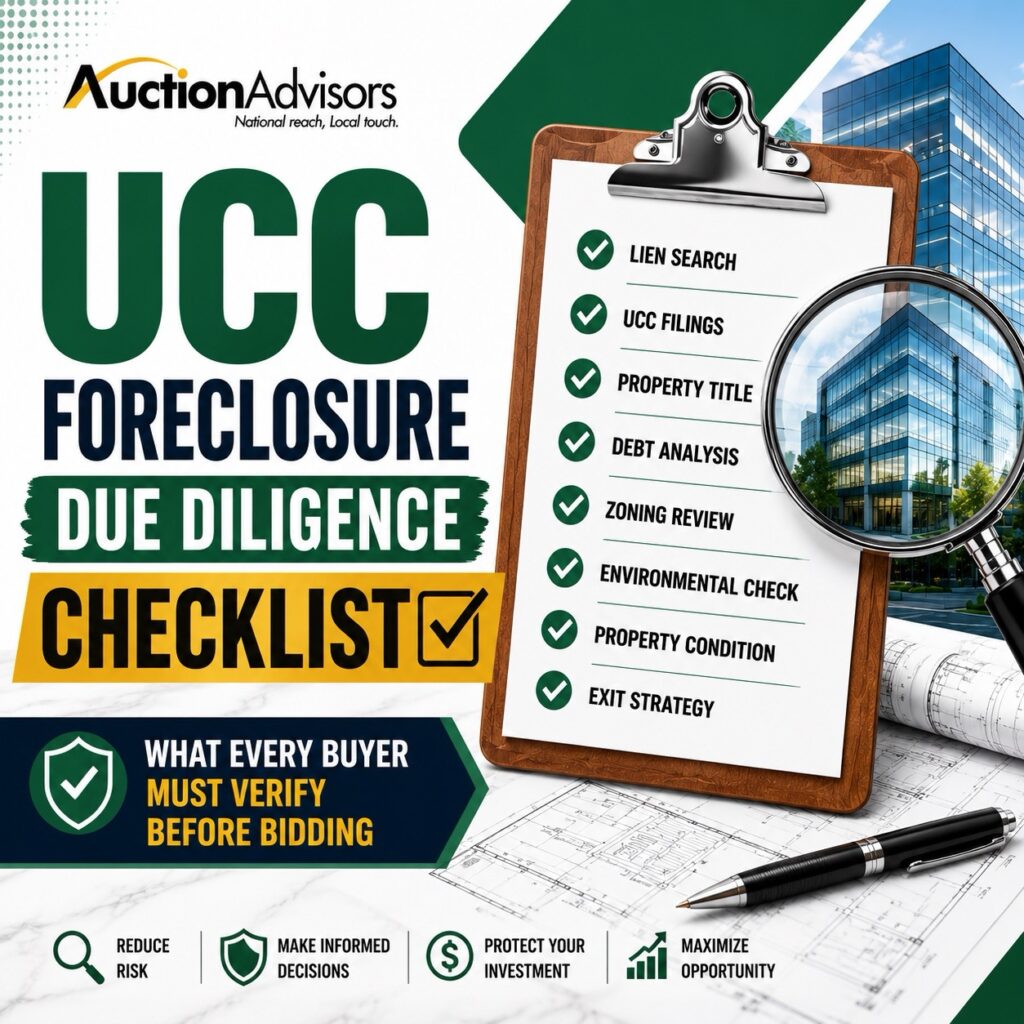
Use a Practical Due Diligence Checklist Before You Bid
A structured checklist helps ensure that no critical area is overlooked during the review process.
Before participating in a UCC foreclosure sale, consider confirming that you have completed the following:
Property Review
- ✔ Property inspection completed
- ✔ Market value analyzed
- ✔ Title report reviewed
- ✔ Environmental assessment considered
- ✔ Zoning verified
- ✔ Existing leases reviewed
Entity Review
- ✔ Operating agreement examined
- ✔ Membership interests verified
- ✔ Financial statements reviewed
- ✔ Tax filings analyzed
- ✔ Existing contracts evaluated
- ✔ Litigation search completed
Legal Review
- ✔ Loan documents reviewed
- ✔ Security interests confirmed
- ✔ Article 9 compliance evaluated
- ✔ UCC filings verified
- ✔ Sale procedures understood
Financial Review
- ✔ Existing debt identified
- ✔ Capital structure analyzed
- ✔ Insurance coverage reviewed
- ✔ Future operating costs estimated
Following a consistent checklist helps investors make informed decisions while reducing the likelihood of unexpected financial or legal issues after the acquisition.
For additional educational resources covering UCC foreclosure transactions, commercial auctions, and investment strategies.
A Practical UCC Foreclosure Due Diligence Checklist Before You Bid
No matter how attractive a UCC foreclosure opportunity may appear, successful investors understand that preparation is the key to protecting their capital. A structured due diligence checklist helps ensure that every important legal, financial, and operational detail has been reviewed before committing to a purchase.
Rather than making decisions based solely on a property’s location or auction price, experienced investors evaluate the complete investment from the condition of the real estate to the financial health of the LLC and the legal compliance of the foreclosure process. This comprehensive approach reduces uncertainty and improves the likelihood of long-term investment success.
Below is a practical checklist that investors can use before participating in any UCC foreclosure sale.
Property Due Diligence Checklist
Before bidding, confirm that you have reviewed:
✔ Property condition and inspection reports
✔ Structural integrity
✔ HVAC, electrical, and plumbing systems
✔ Roof and building envelope
✔ Environmental reports
✔ Current leases and tenant information
✔ Occupancy rates
✔ Property tax records
✔ Title report
✔ Existing liens and encumbrances
✔ Zoning compliance
✔ Market value analysis
✔ Comparable sales
✔ Insurance requirements
Understanding the property’s physical condition and market position provides the foundation for evaluating its long-term investment potential.
Entity Due Diligence Checklist
Since buyers typically acquire ownership of an LLC rather than the property directly, entity-level review is equally important.
Verify the following:
✔ LLC Operating Agreement
✔ Membership ledger
✔ Ownership percentages
✔ Voting rights
✔ Management authority
✔ Capital contribution requirements
✔ Existing contracts
✔ Vendor agreements
✔ Property management agreements
✔ Financial statements
✔ Tax returns
✔ Bank records
✔ Pending litigation
✔ Corporate filings
✔ Insurance policies
Reviewing these documents helps investors understand exactly what they are acquiring and whether any hidden liabilities may affect future operations.
Legal Due Diligence Checklist
Every UCC foreclosure should be reviewed from a legal perspective.
Important items include:
✔ Loan agreement
✔ Promissory note
✔ Security agreement
✔ UCC Financing Statements (UCC-1)
✔ Continuation statements
✔ Default notices
✔ Sale notices
✔ Auction procedures
✔ Article 9 compliance
✔ Commercially reasonable sale requirements
✔ Legal opinions (when available)
✔ Existing litigation
✔ Judgment searches
A qualified attorney experienced in commercial real estate and Article 9 transactions can help interpret these documents and identify legal risks before bidding.
Financial Due Diligence Checklist
Financial analysis allows investors to estimate the true cost of ownership.
Review:
✔ Existing mortgage balances
✔ Loan maturity dates
✔ Interest rates
✔ Property taxes
✔ Vendor balances
✔ Operating expenses
✔ Cash flow
✔ Capital expenditures
✔ Maintenance history
✔ Utility costs
✔ Reserve accounts
✔ Refinancing requirements
A low purchase price may appear attractive, but existing debt and future expenses often determine the investment’s actual profitability.
Work With Experienced Professionals
No investor is expected to handle every aspect of due diligence alone.
Building an experienced advisory team significantly improves the quality of the review process.
Your team may include:
- Commercial real estate attorneys
- UCC foreclosure specialists
- Certified public accountants
- Environmental consultants
- Property inspectors
- Title professionals
- Commercial real estate brokers
- Financial advisors
Working with professionals allows investors to identify issues that might otherwise go unnoticed while improving confidence throughout the acquisition process.
For more information about AuctionAdvisors and its experienced professionals.
Conclusion
A UCC foreclosure offers investors access to unique commercial real estate opportunities, but it also demands a more comprehensive level of due diligence than a traditional foreclosure. Because buyers typically acquire ownership interests in an LLC rather than taking direct title to the property, every aspect of the transaction, from the property’s condition to the entity’s legal and financial history, should be carefully evaluated before bidding.
The most successful investors recognize that thorough preparation is one of the best ways to reduce risk and improve long-term investment performance. Reviewing legal documents, financial records, operating agreements, existing debt, contracts, insurance policies, and ownership rights provides a complete understanding of the opportunity before making a financial commitment.
Whether you’re purchasing your first UCC foreclosure or adding another commercial asset to your portfolio, following a structured due diligence checklist can help you make informed decisions with greater confidence.
To continue learning about UCC foreclosure sales and distressed commercial real estate opportunities, explore these helpful resources from AuctionAdvisors.
Frequently Asked Questions (FAQ)
1. What is due diligence in a UCC foreclosure?
Due diligence in a UCC foreclosure is the process of reviewing the property, the LLC that owns it, legal documents, financial records, existing debt, contracts, and other relevant information before participating in the sale. Comprehensive due diligence helps investors identify risks and make informed investment decisions.
2. Why is entity-level due diligence important?
Unlike a traditional foreclosure, buyers in a UCC foreclosure generally acquire ownership of the LLC rather than direct ownership of the property. Reviewing the LLC’s operating agreement, financial statements, tax filings, and contracts helps investors understand the entity’s obligations and potential liabilities.
3. What documents should buyers review before bidding?
Important documents include:
- Operating agreement
- Loan documents
- Security agreement
- UCC financing statements
- Financial statements
- Tax returns
- Title report
- Existing leases
- Insurance policies
- Pending litigation records
Reviewing these documents provides a clearer understanding of both the property’s value and the LLC’s financial and legal condition.
4. Should investors hire professional advisors during due diligence?
Yes. Many investors work with commercial real estate attorneys, accountants, title professionals, environmental consultants, and property inspectors to evaluate complex UCC foreclosure transactions and identify potential risks before bidding.
5. What are the biggest risks buyers should look for?
Common risks include:
- Existing mortgages
- Tax liens
- Hidden LLC liabilities
- Pending litigation
- Transfer restrictions
- Environmental concerns
- Deferred maintenance
- Incomplete legal documentation
Identifying these issues early helps investors avoid costly surprises after closing.