Does Bankruptcy Stop a UCC Article 9 Sale? The Automatic Stay Explained
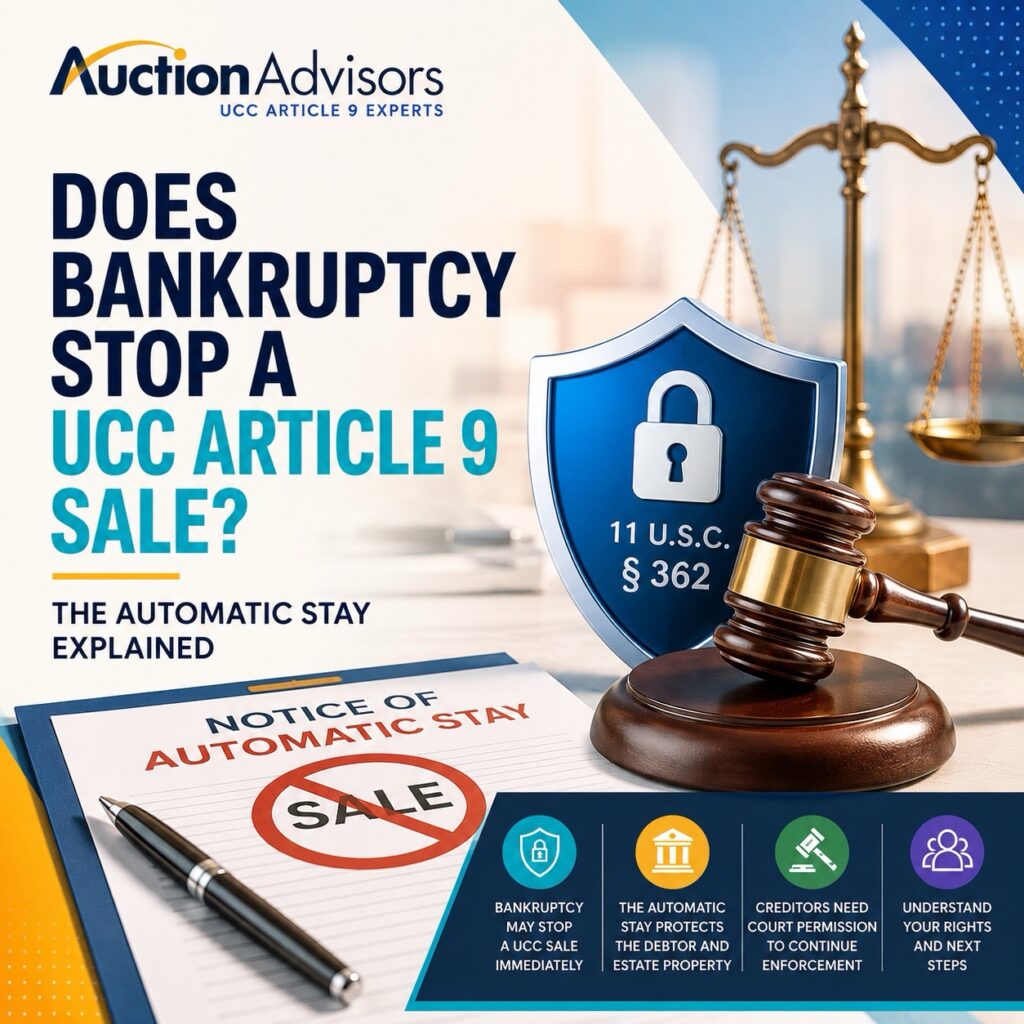
In many cases, yes. A bankruptcy filing can immediately interrupt a planned UCC Article 9 disposition because the automatic stay generally prohibits acts to obtain possession of estate property or enforce a lien against it. The result can be a sudden halt even when an auction has already been noticed, marketed, and scheduled.
A bankruptcy filing can stop a UCC Article 9 sale immediately.
Under 11 U.S.C. § 362(a), filing a bankruptcy petition generally stays acts to obtain possession of property of the bankruptcy estate and acts to create, perfect, or enforce liens against estate property. A secured creditor that wants to continue enforcement may need relief from the automatic stay from the bankruptcy court before proceeding.
Consider a lender that has spent several weeks preparing a public auction of equipment and inventory. Notices have gone out, qualified buyers have reviewed diligence materials, and bidding is scheduled for the next morning. Late that afternoon, the debtor files Chapter 11. The practical effect can be immediate: the sale team may have to stop the auction process and wait for bankruptcy counsel to determine whether the automatic stay applies and what steps are available next.
That is one of the most important differences between a normal UCC foreclosure sale process and a bankruptcy-supervised disposition. Article 9 may provide a nonjudicial enforcement path before bankruptcy, but a bankruptcy filing can place the collateral and enforcement process under federal court protection.
What Does the Automatic Stay Do to an Article 9 Foreclosure?
The automatic stay arises from federal bankruptcy law, not from Article 9. Under 11 U.S.C. § 362, the filing of a bankruptcy petition generally stays several categories of creditor activity, including acts to obtain possession of property of the estate and acts to create, perfect, or enforce a lien against estate property.
The stay is called “automatic” because the debtor generally does not need to obtain a separate injunction for it to take effect. That feature is what makes a bankruptcy filing so disruptive to a fast-moving secured-party sale.
Bankruptcy does not erase the secured creditor’s lien. It changes the enforcement environment. The creditor may remain secured, but enforcement against estate property is generally subject to the automatic stay and bankruptcy court procedures.
What Happens if the UCC Sale Is Already Scheduled?
The timing of the filing is critical. If the petition is filed while the collateral remains property of the bankruptcy estate and the secured party has not completed the legally significant disposition, the auction may need to stop.
A common auction scenario is a filing only hours before the scheduled sale. The secured party may already have incurred substantial marketing expense, bidders may have submitted deposits, and inspections may be complete. Those facts do not necessarily override the stay. The operational focus shifts from executing the auction to preserving the process while bankruptcy counsel evaluates the next step.
Auction professionals and secured parties should not treat a last-minute bankruptcy filing as a technicality. Whether the stay applies, whether an exception exists, and whether previously obtained stay relief remains effective are legal questions for bankruptcy counsel.
In practice, bidder communications often become the first immediate task. Buyers should receive clear instructions about whether bidding is suspended, postponed, or cancelled. Preserving credibility with qualified buyers can matter if the creditor later receives permission to resume the sale.
Does the Collateral Have to Be Property of the Bankruptcy Estate?
The answer can materially affect the analysis. Section 362(a) protects both the debtor in certain respects and property of the bankruptcy estate. Whether particular collateral is estate property may depend on ownership, possession, contractual rights, prior transfers, and the timing of enforcement steps.
That issue can become complicated with pledged equity interests, consigned goods, leased equipment, accounts receivable, intellectual property, or assets held by affiliates. A borrower filing bankruptcy does not automatically mean every asset connected to the business is property of that debtor’s estate.
For example, imagine a lender foreclosing on membership interests in a subsidiary rather than assets owned directly by the debtor. The bankruptcy filing may still have major consequences, but the ownership structure and precise collateral description become central. Counsel needs to determine what property entered the estate and what enforcement activity is stayed.
How Can a Secured Creditor Obtain Relief From the Automatic Stay?
A secured creditor is not necessarily forced to wait until the bankruptcy case ends. Section 362(d) allows a party in interest to request relief from the stay. Depending on the facts, the bankruptcy court may terminate, modify, condition, or annul the stay.
Bankruptcy Rule 4001 governs motions for relief from the automatic stay and related procedures. The rule requires a motion and service on specified parties, and it also addresses emergency relief and the timing of orders. See Federal Rule of Bankruptcy Procedure 4001.
Lack of adequate protection
A creditor may argue that its interest in the collateral is not adequately protected, particularly where the collateral is deteriorating, depreciating, or being consumed.
No equity and not needed for reorganization
Section 362(d) also provides a path to relief where the debtor lacks equity in the property and the property is not necessary for an effective reorganization, subject to the statute and case-specific analysis.
Relief from stay is not automatic simply because the creditor has a valid lien or an auction was already scheduled. The bankruptcy court determines whether the statutory standards have been met.
What Is Adequate Protection and Why Does It Matter?
Adequate protection is a bankruptcy concept designed to protect a secured creditor’s interest in property when bankruptcy restrictions prevent immediate enforcement or when estate use may reduce the value of that interest.
11 U.S.C. § 361 describes forms adequate protection may take, including cash payments, replacement or additional liens, or other relief that provides the creditor with the indubitable equivalent of its interest.
Suppose the collateral is a fleet of vehicles that continues to be used after the bankruptcy filing. The lender may be less concerned with the calendar delay itself than with depreciation, insurance, maintenance, and whether its economic position is deteriorating while the automatic stay prevents foreclosure.
This is one reason stay litigation can move quickly. The longer rapidly depreciating collateral remains in use, the more significant adequate protection and sale timing may become.
What Happens to Bidders and the Auction Process During the Stay?
An interrupted auction creates a practical problem that bankruptcy statutes do not solve for the sale team: how to preserve buyer interest while the legal process changes.
Pause sale activity when instructed
Do not continue bid solicitation, acceptance, or other enforcement activity if counsel determines that doing so could violate the stay.
Preserve the qualified bidder list
Maintain contact information, diligence records, registrations, and bidder qualification materials so the market can be reactivated if the sale resumes.
Explain schedule changes clearly
Buyers do not need legal speculation. They need accurate operational information about whether deadlines and auction dates remain valid.
Preserve the marketing record
Records of advertisements, direct outreach, data-room access, inquiries, inspections, and bidder activity may remain useful in a later Article 9 or bankruptcy sale.
This documentation can also help the secured party and counsel evaluate whether continuing the existing auction process after stay relief is practical or whether the bankruptcy creates a better path through a court-supervised sale.
Could the Sale Move From Article 9 to a Section 363 Process?
Yes. A bankruptcy filing can change not only the timing of a sale but also the sale structure. Instead of seeking relief from stay and returning to the Article 9 process, the parties may consider a sale under Bankruptcy Code § 363.
| Issue | Article 9 disposition | Section 363 sale |
|---|---|---|
| Court supervision | Generally nonjudicial outside bankruptcy | Bankruptcy court approval is central to the process |
| Speed and flexibility | Often more streamlined | Requires motions, notice, hearings, and court scheduling |
| Buyer protections | Governed by Article 9 and applicable state law | May provide bankruptcy-court sale protections under § 363 |
| Creditor control | Secured party generally directs its disposition subject to Article 9 | The bankruptcy process introduces debtor, court, and other stakeholder involvement |
Auction Advisors has a dedicated comparison of Article 9 sales and Section 363 bankruptcy sales, as well as a broader discussion of how secured creditors may evaluate the two sale paths.
The best route depends on the collateral, lien structure, bankruptcy strategy, buyer needs, and the creditor’s objectives. The auction professional can support marketing and sale execution under either structure, but bankruptcy counsel should determine the legal path.
What Should the Sale Team Do Immediately After a Bankruptcy Filing?
The first hours after a filing are often more important operationally than the next several weeks. A disciplined response can prevent accidental continuation of activity that should have stopped while preserving as much of the sale process as possible.
The secured party should also determine whether collateral is declining in value, whether insurance and preservation expenses are being maintained, and whether adequate protection will be requested. Those facts can influence the creditor’s bankruptcy strategy.
Auction Advisors can assist with the marketing, bidder outreach, diligence, and auction administration components while counsel addresses the automatic stay, stay relief, and other bankruptcy issues.
The Practical Takeaway for a UCC Sale Interrupted by Bankruptcy
A bankruptcy filing does not eliminate the secured creditor’s economic interest in collateral, but it can immediately change how that interest may be enforced. The automatic stay under § 362 can interrupt repossession and disposition activity, sometimes only hours before a scheduled auction.
The most useful response is not to guess whether the sale can continue. Confirm the filing, involve bankruptcy counsel, preserve the buyer pool and sale record, and determine whether the next step is stay relief, a consensual resolution, or a bankruptcy-supervised sale.
Planning a Secured-Party Sale?
When bankruptcy affects the timing or structure of a disposition, the auction and marketing process still needs disciplined execution.
Contact Auction AdvisorsFrequently Asked Questions
Does bankruptcy automatically stop a UCC Article 9 sale?
Often, yes, if the proposed enforcement involves property of the bankruptcy estate or another activity covered by 11 U.S.C. § 362(a). The stay generally takes effect when the bankruptcy petition is filed. Whether it applies to a particular collateral package or enforcement step can depend on ownership, timing, prior orders, statutory exceptions, and other facts.
Does the debtor need a court order for the automatic stay to apply?
Generally no. The automatic stay is called automatic because it typically arises by operation of the Bankruptcy Code upon filing of the petition. That is different from a debtor seeking a temporary restraining order in state court before bankruptcy. Secured parties should have bankruptcy counsel confirm the stay’s scope before continuing any scheduled foreclosure activity.
Can a secured creditor continue the auction after the bankruptcy filing?
Not simply because the auction was already scheduled. If the stay applies, continuing enforcement may require relief from the bankruptcy court or another valid legal basis. A creditor should not assume that prior notices, marketing expenses, deposits, or bidder participation allow the sale to proceed notwithstanding the filing.
What is a motion for relief from the automatic stay?
It is a request asking the bankruptcy court to terminate, modify, condition, or otherwise grant relief from the stay so the creditor can take specified action. Section 362(d) provides statutory grounds for relief, and Bankruptcy Rule 4001 governs the motion procedure. The outcome depends on the facts and the applicable bankruptcy-law standards.
What does lack of adequate protection mean?
Adequate protection concerns preservation of a secured creditor’s interest in collateral during bankruptcy. If collateral is declining in value while the creditor is prevented from enforcing its lien, the creditor may seek protection such as cash payments, additional or replacement liens, or other relief permitted by the Bankruptcy Code.
Can a UCC Article 9 sale resume after stay relief?
Potentially. If the bankruptcy court grants relief allowing foreclosure activity to continue, the secured party may be able to resume the Article 9 process. Counsel should evaluate the scope and effective date of the order, whether prior notices remain usable, whether the auction terms require revision, and whether additional sale steps are appropriate.
What happens to bidder deposits when bankruptcy stops an auction?
The answer depends on the bid procedures, deposit terms, whether bids were binding, and instructions from the secured party and counsel. The auction administrator should follow the governing terms and communicate clearly with bidders rather than improvising a refund, rollover, or retention policy after the filing.
Is a Section 363 sale the same as a UCC Article 9 sale?
No. An Article 9 disposition is generally a state-law secured-party enforcement process, while a Section 363 sale occurs within bankruptcy and is subject to bankruptcy court procedures and approval. Both may involve professional marketing and competitive bidding, but the legal framework and buyer protections differ.
Can bankruptcy affect collateral that has already been repossessed?
Yes, depending on ownership and the status of the collateral when the petition was filed. Physical possession by the creditor does not automatically answer whether the property is part of the estate or whether further disposition is stayed. Bankruptcy counsel should analyze the precise facts before additional enforcement activity occurs.
Who decides whether the Article 9 auction can continue after bankruptcy?
The legal determination should be made with bankruptcy counsel, and in many situations the bankruptcy court controls whether enforcement may proceed. The secured party makes its business and enforcement decisions within that legal framework. The auction professional’s role is to execute marketing, bidder communication, diligence, and sale administration consistent with those instructions.
This article is for general informational purposes only and does not constitute legal advice. Bankruptcy law, Article 9 issues, ownership questions, court orders, and transaction-specific facts can materially affect the analysis.