
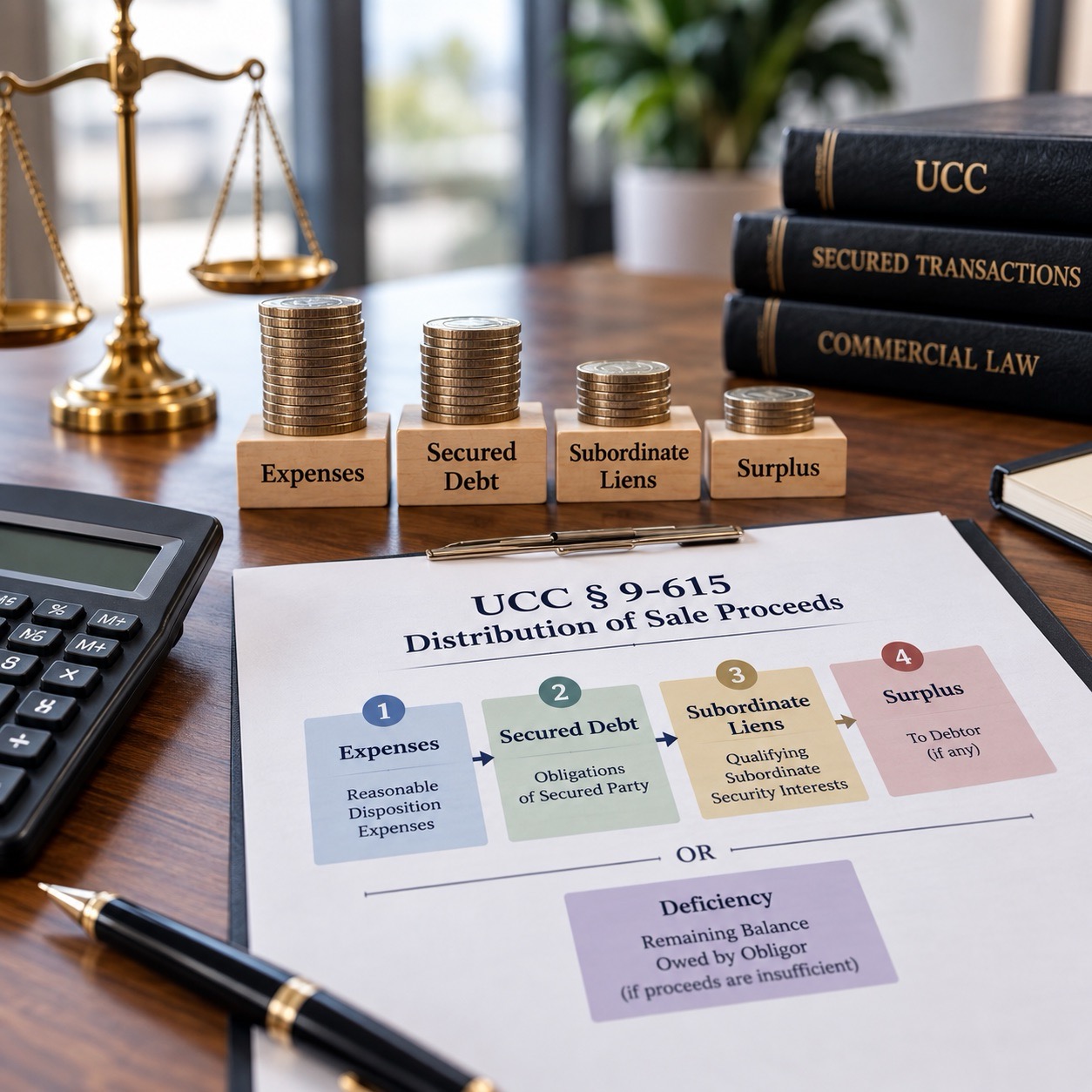
UCC § 9-615 establishes the order for applying cash proceeds after an Article 9 disposition. In general, proceeds are applied first to reasonable disposition expenses, then to the secured obligation being enforced, followed by qualifying subordinate claims. Any remaining surplus is generally payable to the debtor, while the obligor may remain liable for a deficiency.
What Is the UCC § 9-615 Order of Distribution?
After collateral is disposed of under UCC § 9-610, the secured party must apply or pay over the cash proceeds according to the statutory priority structure.
1. Reasonable Disposition and Enforcement Expenses
The first category generally includes reasonable expenses associated with retaking, holding, preparing, processing, and disposing of the collateral.
Reasonable attorney’s fees and legal expenses may also be included when permitted by the agreement and applicable law.
2. The Secured Obligation Being Enforced
After permitted expenses, proceeds are applied to the obligations secured by the security interest or agricultural lien under which the disposition is being made.
3. Qualifying Subordinate Security Interests and Liens
Certain subordinate secured parties or lienholders may be entitled to payment if they satisfy the requirements of UCC § 9-615, including making an authenticated demand before the distribution is completed.
4. Certain Consignor Interests
Section 9-615 also contains provisions addressing consignors when applicable.
What Happens If There Is a Surplus?
If the collateral produces more cash than is required to satisfy permitted expenses, the secured obligation, and qualifying subordinate claims, the secured party generally must account to and pay the remaining surplus to the debtor.
What Happens If There Is a Deficiency?
If the sale proceeds are insufficient to satisfy the secured obligation, the obligor may remain liable for the deficiency.
The exact amount of the deficiency depends on the debt balance, permitted expenses, sale proceeds, and applicable Article 9 rules.
Example: How Article 9 Sale Proceeds Are Distributed
Assume commercial collateral is sold for $500,000.
The creditor has:
- $35,000 in reasonable permitted disposition expenses
- $410,000 remaining on the secured obligation
- A qualifying subordinate lien claim of $25,000
| Distribution Step | Amount | Remaining Proceeds |
|---|---|---|
| Gross Sale Proceeds | $500,000 | $500,000 |
| Reasonable Disposition Expenses | $35,000 | $465,000 |
| Secured Obligation | $410,000 | $55,000 |
| Qualifying Subordinate Lien | $25,000 | $30,000 |
| Potential Surplus to Debtor | $30,000 | $0 |
In this simplified example, the remaining $30,000 would potentially constitute surplus payable to the debtor.
Real transactions can be more complicated. There may be disputed expenses, multiple subordinate liens, noncash proceeds, consignor interests, tax claims, or other issues affecting the final distribution.
Post-Sale Accounting Checklist for Secured Creditors
- Confirm the gross proceeds actually received
- Itemize all enforcement and disposition expenses
- Confirm that each expense is reasonable and permitted
- Apply proceeds to the secured obligation
- Review authenticated demands from subordinate lienholders
- Verify subordinate interests where appropriate
- Address applicable consignor interests
- Calculate any remaining surplus
- Pay or account for the debtor’s surplus when required
- Calculate any remaining deficiency
- Retain all supporting accounting and sale documentation
Why the Sale Process Matters to the Final Deficiency
The proceeds calculation cannot be separated from the underlying disposition.
A creditor seeking a deficiency should be prepared to demonstrate that the collateral was sold through a compliant and commercially reasonable process.
Weak marketing, inadequate notice, an insider sale, or poor valuation support may all become relevant if the debtor challenges the amount of the claimed deficiency.
For additional guidance, review our UCC Article 9 Sales Guide and our article explaining commercial reasonableness under Article 9 .
Frequently Asked Questions
What gets paid first from an Article 9 collateral sale?
UCC § 9-615 generally applies cash proceeds first to reasonable expenses associated with retaking, holding, preparing, processing, and disposing of the collateral, along with permitted legal expenses.
Does the debtor receive money if the collateral sells for more than the debt?
Generally, the secured party must account to and pay the debtor any surplus remaining after the required applications of proceeds.
Who is responsible for a deficiency?
The obligor generally remains liable for a deficiency after the required application of proceeds, subject to Article 9 compliance, the governing agreement, and applicable state law.
Do junior lienholders automatically receive sale proceeds?
Not automatically. UCC § 9-615 contains requirements for payment of subordinate interests, including receipt of an authenticated demand before distribution is completed.
Can an unreasonable sale reduce a deficiency claim?
Potentially. If the disposition fails to comply with Article 9, including commercial reasonableness requirements, the creditor’s claimed deficiency may be challenged or adjusted under applicable law.
Legal Note: Article 9 is enacted through state law, and state-specific statutes, court decisions, transaction documents, and consumer-protection rules may change the analysis. This article is for general informational purposes and is not legal advice.