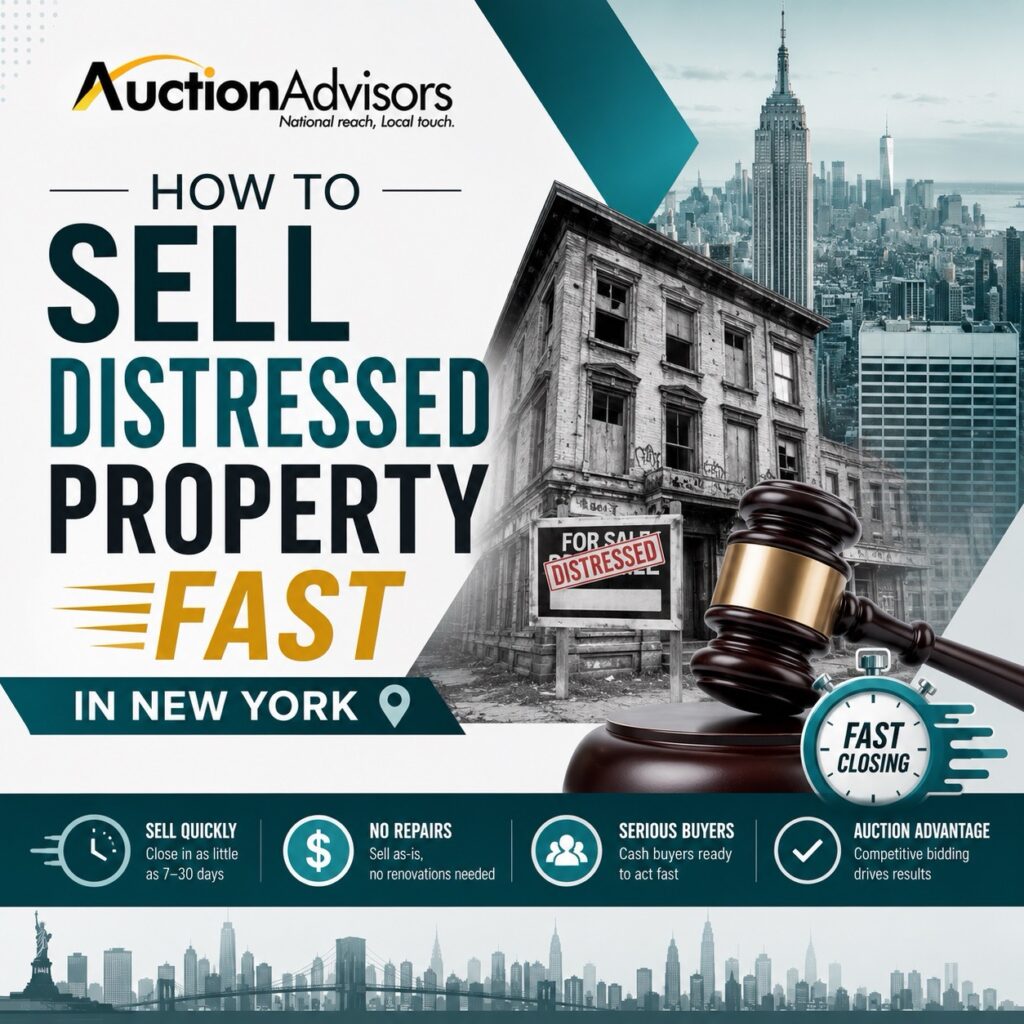
Selling a distressed property in New York can be one of the most challenging situations a property owner faces. Whether the property is facing financial distress, legal complications, physical deterioration, or market-related issues, the traditional sales process may not always deliver timely or effective results. In a city like NYC, where real estate values are high but conditions can vary significantly, speed and strategy are critical when dealing with distressed assets.
A real estate auction in NYC has emerged as one of the most effective solutions for selling distressed properties quickly. Unlike traditional brokerage methods that can take months, auctions create a competitive and time-bound environment that attracts serious buyers ready to act. This is particularly important when dealing with properties that require immediate liquidity, restructuring, or resolution.
Sellers exploring property auction New York strategies often work with firms that specialize in accelerated marketing and auction solutions. Understanding how to position a distressed property, attract the right buyers, and execute a fast sale is essential for achieving the best possible outcome under challenging circumstances.
1. What Is Considered a Distressed Property in NYC?
A distressed property refers to any real estate asset that is under financial, legal, or physical pressure, making it difficult to sell through traditional channels. In New York, distressed properties can take many forms, ranging from foreclosure situations to buildings requiring significant repairs or restructuring.
Distress may arise from unpaid debt, tax liens, legal disputes, tenant issues, or deferred maintenance. In some cases, owners may face urgent financial obligations that require a quick sale. In others, the property itself may have structural or operational challenges that limit its appeal to conventional buyers.
In a real estate auction in New York, distressed properties are often marketed as opportunities for investors, developers, and buyers looking for value-driven acquisitions. These buyers are typically prepared to evaluate risk and act quickly, making auctions an effective platform for these types of assets.
Understanding the nature of distress is important because it determines the strategy for selling. A property with financial distress may require a different approach than one with physical issues. Identifying these factors helps sellers choose the most effective path to a successful sale.
2. Challenges of Selling Distressed Property Through Traditional Brokerage
Selling distressed property through traditional brokerage channels can be difficult due to the nature of the asset and the expectations of typical buyers. Many buyers in standard listings are looking for move-in-ready properties or stable investments, which may not align with distressed conditions.
One of the main challenges is pricing. Distressed properties can be difficult to value because of their condition or underlying issues. Setting the wrong price may result in limited interest or prolonged time on the market. Additionally, traditional buyers often request contingencies, inspections, and financing approvals, which can delay or complicate the transaction.
Another challenge is perception. Properties labeled as distressed may attract fewer buyers or lower offers, especially if they remain on the market for extended periods. This can create a cycle where the property becomes harder to sell over time.
In contrast, a real estate auction in NYC reframes the property as an opportunity rather than a problem. By creating urgency and competition, auctions attract a different type of buyer, one who is prepared to evaluate and act on distressed opportunities.
3. Why Auctions Are Effective for Distressed Property Sales
Auctions are particularly effective for distressed properties because they address many of the challenges associated with traditional sales. A real estate auction creates a structured and time-sensitive environment that encourages buyer participation and accelerates the transaction process.
Key Advantages of Auctions:
- Defined timeline with a set sale date
- Competitive bidding environment
- Attraction of investors and opportunistic buyers
- Reduced reliance on prolonged negotiations
Benefits for Distressed Sellers:
- Faster access to liquidity
- Increased exposure to qualified buyers
- Market-driven pricing
In a property auction in New York, distressed assets are marketed strategically to highlight their potential rather than their challenges. This approach attracts buyers who specialize in repositioning or redeveloping properties.
Platforms like these provide targeted marketing and auction management services that help sellers reach the right audience. By focusing on speed and competition, auctions offer a practical solution for selling distressed properties efficiently.
4. Preparing a Distressed Property for Auction
Preparation is a critical step in selling distressed property through a real estate auction NYC. While the property may have challenges, presenting it effectively can significantly impact buyer interest and bidding activity.
Sellers should begin by gathering all relevant documentation, including title information, financial records, property details, and any reports related to condition or legal status. Transparency is important, as buyers need accurate information to evaluate the opportunity.
In some cases, minor improvements or basic maintenance can enhance the property’s appeal without requiring significant investment. However, sellers should balance the cost of improvements with the urgency of the sale.
Marketing materials should focus on the property’s potential, location advantages, and investment opportunities. Highlighting redevelopment possibilities, rental income potential, or market positioning can attract investor interest.
Working with experienced professionals ensures that the property is positioned correctly in the market. Preparation helps create confidence among buyers and supports stronger participation during the auction process.
5. Attracting the Right Buyers for Distressed Assets
The success of a distressed property sale depends largely on attracting the right type of buyers. Unlike traditional residential buyers, distressed properties are typically of interest to investors, developers, and opportunistic buyers who are experienced in handling complex transactions.
Target Buyer Groups:
- Real estate investors seeking value opportunities
- Developers looking for redevelopment projects
- Institutional buyers targeting distressed portfolios
- Cash buyers are prepared for quick transactions
Strategies to Attract Buyers:
- Targeted marketing campaigns
- Highlighting investment potential
- Providing clear and detailed property information
A commercial real estate auction or residential distressed auction benefits from focused outreach to these buyer groups. Platforms like help connect sellers with qualified buyers who understand the nature of distressed assets.
By targeting the right audience, sellers can increase competition and improve the likelihood of achieving a successful sale.
6. Pricing Strategy for Distressed Property Auctions
Pricing a distressed property requires a different approach than pricing a standard asset. In traditional sales, pricing is often based on comparable properties, but distressed assets may not have direct comparables due to their condition or circumstances.
In a real estate auction in New York, pricing is influenced by buyer demand rather than a fixed asking price. Sellers may choose to set a reserve price or allow the market to determine value through competitive bidding.
This approach can be advantageous because it avoids the risks of overpricing or underpricing. Instead, the auction process reveals what buyers are willing to pay based on their assessment of the property’s potential.
For sellers, the goal is to create enough interest to generate competition. A well-executed auction strategy can lead to pricing outcomes that reflect market demand, even for distressed properties.
Understanding how to position pricing within the auction framework is essential for achieving the best results.
7. Speed and Certainty in Closing Distressed Sales
One of the most important benefits of a real estate auction in NYC for distressed property is the speed and certainty it provides. Traditional sales can take months and may fall through due to financing issues or buyer hesitation. Auctions, on the other hand, establish clear timelines and expectations from the start.
Why Auctions Provide Speed:
- Defined marketing and sales timeline
- Pre-qualified buyers ready to act
- Immediate commitment after winning the bid
Certainty Advantages:
- Reduced risk of deal failure
- Limited contingencies
- Faster transition to closing
For distressed property owners, speed is often a priority. Delays can increase financial pressure and complicate the situation further. Auctions provide a solution by compressing the timeline and ensuring that buyers are prepared to complete the transaction.
This combination of speed and certainty makes auctions a preferred method for resolving distressed property situations in New York.
8. Working with Experts to Maximize Results
Selling a distressed property requires expertise in both real estate and the auction process. Working with experienced professionals can significantly improve outcomes by ensuring that the property is marketed effectively and the sale is executed efficiently.
Auction firms provide services such as property evaluation, marketing strategy, buyer outreach, and auction management. These services are particularly important for distressed properties, where positioning and timing are critical.
Benefits of Working with Experts:
- Access to qualified buyer networks
- Professional marketing campaigns
- Guidance through complex transactions
Choosing the Right Partner:
- Experience with distressed properties
- Strong track record in auctions
- Understanding of NYC market dynamics
Sellers can explore opportunities and receive guidance to determine the best approach for their situation. Professional support ensures that the sale process is handled effectively, allowing sellers to focus on resolving their financial or operational challenges.
Conclusion
Selling distressed property in New York requires a strategic approach that prioritizes speed, efficiency, and market positioning. Traditional brokerage methods may not always be effective in these situations due to extended timelines, pricing challenges, and limited buyer interest.
A real estate auction in NYC provides a powerful alternative by creating a competitive environment, attracting qualified buyers, and accelerating the sales process. For distressed property owners, this approach offers a way to achieve liquidity quickly while minimizing uncertainty.
By preparing the property effectively, targeting the right buyers, and working with experienced professionals, sellers can navigate the challenges of distressed sales and achieve successful outcomes. Auctions transform distressed assets into opportunities, allowing the market to determine value in a transparent and efficient manner.
As the NYC real estate market continues to evolve, auctions are becoming an increasingly important tool for resolving distressed property situations. Sellers who understand and utilize this approach can benefit from faster transactions and more reliable results.
FAQs
1. What is a distressed property?
A property facing financial, legal, or physical challenges.
2. Why are auctions good for distressed properties?
They provide speed and attract investors.
3. Can distressed properties sell quickly in NYC?
Yes, especially through auctions.
4. Do buyers expect discounts on distressed assets?
Often yes, but competition can increase value.
5. Is preparation required before the auction?
Yes, documentation and marketing are essential.
6. Who buys distressed properties?
Investors, developers, and cash buyers.
7. Are auctions faster than traditional sales?
Yes, significantly faster.
8. Can sellers set a minimum price?
Yes, through reserve auctions.
9. Do distressed properties require repairs before selling?
Not always, but presentation helps.
10. Where can I sell distressed property in NYC?
Through firms like Auction Advisors.