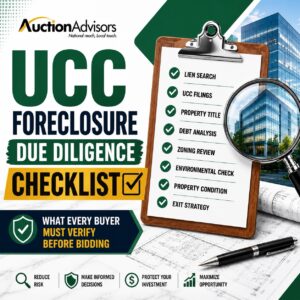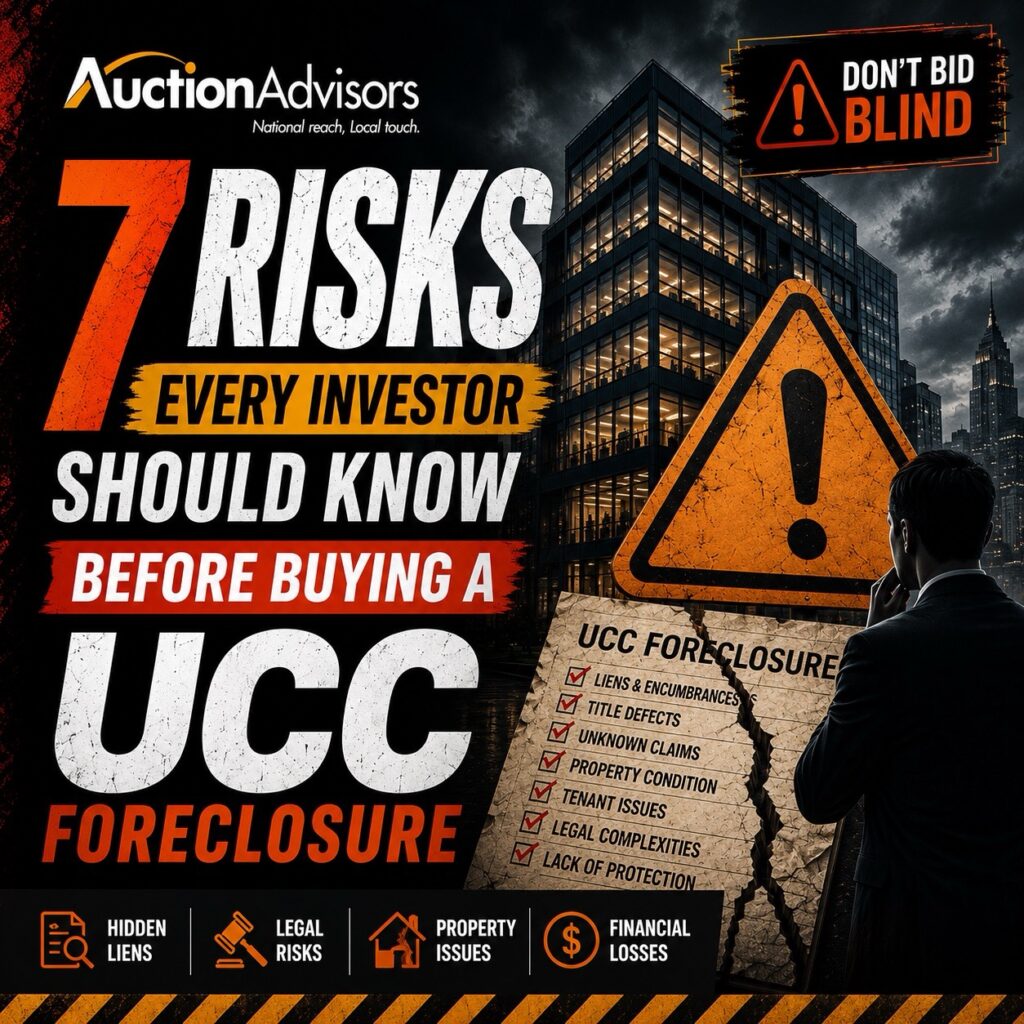
Investing in distressed commercial real estate can provide unique opportunities, but it also comes with challenges that require careful evaluation. One investment option attracting growing attention is the UCC foreclosure. These sales often move faster than traditional foreclosures and may offer attractive pricing, making them appealing to experienced and first-time investors alike.
However, purchasing through a UCC foreclosure is not the same as buying a foreclosed property at a courthouse auction. Instead of acquiring the real estate directly, buyers usually purchase ownership interests in the limited liability company (LLC) that owns the property. This means the buyer may also inherit the company’s financial obligations, contractual responsibilities, and legal risks.
Without a thorough understanding of how these transactions work, investors can overlook issues that significantly affect the value of their investment. While UCC foreclosure sales can create profitable opportunities, success depends on identifying potential risks before placing a bid.
In this guide, we’ll examine the seven most important risks every investor should understand before buying a UCC foreclosure and explain how careful due diligence can help reduce those risks. To learn more about commercial auctions and distressed asset sales.
Existing Liens and Debt Can Remain After the Sale
One of the biggest misunderstandings surrounding UCC foreclosure sales is the belief that purchasing through a foreclosure automatically eliminates existing debt. In many traditional foreclosure proceedings, certain junior liens may be removed according to applicable law. A UCC foreclosure, however, generally does not have the same effect because the lender is selling ownership interests in the LLC, not transferring title to the real estate itself.
As a result, existing obligations associated with the property may remain in place after the sale.
These obligations can include:
- Commercial mortgages
- Property tax liens
- Judgment liens
- Mezzanine financing
- Other secured debt
For investors, this means the auction purchase price may represent only part of the property’s total financial commitment.
Why Existing Debt Matters
Imagine purchasing an office building through a UCC foreclosure at what appears to be an excellent price.
After closing, you discover the LLC still owes millions under an existing commercial mortgage that must be refinanced, restructured, or repaid.
Without identifying that obligation beforehand, the overall investment could become far more expensive than expected.
This is why experienced investors always review the complete capital structure before bidding.
Review the Property’s Financial Position Carefully
Before participating in any UCC foreclosure sale, buyers should investigate:
- Outstanding mortgage balances
- Loan maturity dates
- Existing lien priority
- Property tax status
- Recorded judgments
- UCC financing statements
A comprehensive review helps investors estimate the true cost of ownership rather than focusing solely on the winning bid amount.
AuctionAdvisors regularly publishes educational resources that help investors better understand these transactions.
Don’t Assume the Lowest Bid Is the Best Opportunity
An attractive auction price often receives the most attention, but experienced commercial real estate investors understand that acquisition cost is only one part of the investment equation.
Understanding existing debt obligations allows buyers to:
- Estimate future cash flow
- Evaluate refinancing options
- Identify potential financial risks
- Make informed bidding decisions
Careful financial analysis before bidding often separates successful investments from costly mistakes.
Why Hidden LLC Liabilities Can Affect Your Investment
One of the defining characteristics of a UCC foreclosure is that buyers typically acquire ownership of an existing limited liability company (LLC) rather than purchasing the real estate directly. While this ownership structure can simplify certain aspects of the transaction, it also introduces risks that many first-time investors underestimate.
Unlike a conventional property purchase, the LLC has an operating history that continues after the sale. That history may include financial obligations, legal disputes, contractual commitments, and compliance issues that do not disappear simply because ownership changes. As the new owner, you inherit the entity as it exists on the day of closing.
Understanding these hidden liabilities before bidding is one of the most important steps in protecting your investment.
Existing Contracts Continue After the Sale
Businesses rarely operate without agreements in place, and the LLC you acquire may already have numerous active contracts.
These agreements can include:
- Property management contracts
- Maintenance agreements
- Vendor service contracts
- Security service agreements
- Landscaping contracts
- Equipment leases
- Utility agreements
- Professional service agreements
Some of these contracts may be beneficial, while others may contain unfavorable pricing, automatic renewal provisions, or long-term commitments.
Before purchasing an LLC through a UCC foreclosure, investors should identify every active contract and determine whether it aligns with their future investment strategy.
Pending Litigation Can Create Unexpected Costs
Legal disputes represent another area that deserves careful attention.
An LLC involved in ongoing litigation may expose the new owner to additional legal expenses, management distractions, and financial uncertainty.
Examples may include:
- Tenant disputes
- Contract disagreements
- Construction defect claims
- Employment-related matters
- Vendor payment disputes
- Regulatory investigations
Although every lawsuit does not necessarily result in financial loss, unresolved legal matters can significantly influence an investment’s future performance.
Reviewing litigation history with qualified legal counsel before bidding can help investors understand potential exposure.
Tax Obligations Don’t Always End With a Sale
Many investors focus primarily on mortgages and property values while overlooking tax-related issues.
Depending on the circumstances, an LLC may have outstanding obligations such as:
- Property taxes
- State filing requirements
- Federal tax reporting
- Franchise taxes
- Payroll tax obligations
- Business licensing fees
Failure to identify these issues before closing can create unexpected costs after the acquisition.
Reviewing historical tax filings and consulting experienced accounting professionals can provide valuable insight into the company’s financial condition.
Regulatory and Environmental Issues May Affect Future Plans
Commercial properties often operate under local, state, and federal regulations.
An LLC may have existing compliance obligations involving:
- Environmental regulations
- Building code requirements
- Fire safety compliance
- ADA accessibility standards
- Zoning requirements
- Health and safety regulations
Addressing these matters after closing may require significant time and capital.
Investors should confirm that the property complies with applicable regulations before completing a transaction whenever possible.
Financial Statements Tell an Important Story
A property’s appearance alone rarely reflects the financial health of the company that owns it.
Reviewing financial records helps investors understand:
- Revenue trends
- Operating expenses
- Cash flow
- Outstanding debts
- Vendor balances
- Capital expenditures
- Historical performance
These documents often reveal potential concerns that may not be visible during a property inspection.
Comprehensive financial analysis allows buyers to estimate future investment performance more accurately and avoid unpleasant surprises after the sale.
Don’t Overlook the LLC Operating Agreement
The operating agreement is one of the most important documents in any UCC foreclosure transaction.
It outlines how the company functions and defines the rights and responsibilities of its members.
Key provisions often include:
- Voting rights
- Management authority
- Ownership percentages
- Transfer restrictions
- Capital contribution requirements
- Buy-sell provisions
- Decision-making procedures
Understanding these terms helps investors determine exactly what ownership rights they will receive after acquiring the LLC.
Ignoring this document can create operational challenges long after the transaction has closed.
Reduce Risk Through Thorough Due Diligence
Hidden liabilities are not always obvious during an auction process, which is why experienced investors perform extensive due diligence before submitting a bid.
An effective review should include:
- Financial statement analysis
- Tax record verification
- Contract review
- Litigation searches
- Regulatory compliance assessments
- Operating agreement analysis
- Vendor obligation review
- Insurance policy evaluation
The goal is not simply to identify problems but to understand how those issues may influence the investment’s long-term value.
Working with experienced professionals can significantly improve the quality of this evaluation. Learn more about the expertise behind AuctionAdvisors.
Why This Risk Should Never Be Ignored
Hidden LLC liabilities are often the difference between a successful investment and an expensive mistake.
While UCC foreclosure opportunities can provide attractive entry points into commercial real estate, investors should remember that they are acquiring an existing business entity, not starting with a clean slate. Taking the time to investigate financial records, legal obligations, contracts, and operational history provides a clearer understanding of the investment and supports more informed bidding decisions.
Common Legal and Due Diligence Mistakes Buyers Make
Successful UCC foreclosure investments rarely happen by chance. They result from careful planning, thorough research, and a clear understanding of the legal framework governing the transaction. Unfortunately, many investors, especially those new to UCC foreclosure sales, focus primarily on the purchase price while overlooking critical legal and due diligence requirements.
Because a UCC foreclosure involves purchasing ownership interests in an LLC rather than acquiring the property directly, the investigation process extends far beyond a standard real estate transaction. Missing even one important detail can significantly affect the investment’s profitability.
Below are some of the most common mistakes investors make and how to avoid them.
Mistake #1: Assuming It’s the Same as a Traditional Foreclosure
Perhaps the most common mistake is believing that a UCC foreclosure follows the same rules as a courthouse foreclosure.
In a traditional foreclosure, buyers generally focus on:
- Property condition
- Market value
- Title issues
- Financing options
While these factors remain important, a UCC foreclosure requires investors to evaluate both the property and the business entity that owns it.
The LLC may have existing obligations that continue after the sale, making entity-level due diligence just as important as property inspections.
Mistake #2: Failing to Review the Operating Agreement
Many first-time buyers overlook one of the most valuable documents in the transaction, the LLC operating agreement.
This document explains how the company operates and may contain important provisions regarding:
- Voting rights
- Management authority
- Ownership percentages
- Capital contribution requirements
- Transfer restrictions
- Buy-sell agreements
- Member approval requirements
Without reviewing the operating agreement, buyers may discover after closing that their ownership rights are more limited than expected.
Understanding these provisions before bidding helps investors avoid future disputes and operational challenges.
Mistake #3: Ignoring Existing Liens and Financial Obligations
Winning an auction at a competitive price does not necessarily mean you’ve secured a great investment.
Some investors mistakenly assume that existing debts disappear after the UCC sale.
However, mortgages, tax obligations, and other encumbrances attached to the property often remain in place because the transaction transfers ownership of the LLC rather than the real estate itself.
Before bidding, investors should carefully analyze:
- Outstanding loan balances
- Property tax records
- Existing liens
- UCC financing statements
- Judgment searches
- Refinancing requirements
Understanding these financial obligations provides a much clearer picture of the property’s true acquisition cost.
For investors researching current opportunities, AuctionAdvisors provides information on active UCC foreclosure sales.
Mistake #4: Skipping Legal Review
Every UCC foreclosure follows specific legal procedures under Article 9 of the Uniform Commercial Code.
The lender must generally conduct a commercially reasonable sale while providing required notices to interested parties.
Although buyers are not responsible for conducting the sale, understanding whether proper procedures have been followed can help identify potential legal risks.
Experienced real estate attorneys can review:
- Security agreements
- Loan documents
- UCC filings
- Notice requirements
- Sale procedures
- Membership pledge documentation
A relatively small investment in legal review before bidding can help prevent much larger problems after closing.
Mistake #5: Overlooking Financial Records
The property’s physical condition tells only part of the story.
Financial records often reveal issues that cannot be identified during a site visit.
Important documents include:
- Income statements
- Balance sheets
- Cash flow reports
- Tax returns
- Vendor payment history
- Outstanding accounts payable
- Capital expenditure records
Analyzing these documents helps investors estimate future operating performance and identify potential financial concerns before acquiring the LLC.
Mistake #6: Underestimating the Importance of Professional Advisors
Even experienced commercial real estate investors rely on specialists when evaluating complex UCC foreclosure opportunities.
Building the right advisory team can reduce uncertainty throughout the acquisition process.
That team may include:
- Commercial real estate attorneys
- UCC legal specialists
- Certified public accountants
- Title professionals
- Environmental consultants
- Property inspectors
- Commercial lenders
Each professional contributes expertise that helps investors identify potential issues before they become expensive problems. Learn more about the experienced professionals behind AuctionAdvisors.
Careful Due Diligence Leads to Better Investment Decisions
Every UCC foreclosure transaction is unique, and no two investment opportunities carry exactly the same level of risk.
Rather than rushing to place the highest bid, successful investors spend time gathering information, reviewing documents, consulting professionals, and understanding every aspect of the transaction.
A disciplined due diligence process helps investors:
- Identify hidden liabilities
- Understand ownership rights
- Estimate future expenses
- Reduce legal exposure
- Improve investment confidence
- Make informed bidding decisions
Ultimately, thorough preparation is one of the most valuable investments a buyer can make before participating in any UCC foreclosure sale. It not only protects capital but also positions investors to recognize opportunities that align with their long-term financial goals.
How to Reduce Risk Before Bidding on a UCC Foreclosure
Every commercial real estate investment carries some degree of risk, but a UCC foreclosure requires an even higher level of preparation. Since buyers are purchasing ownership interests in an LLC rather than directly acquiring the property, they must evaluate both the business entity and the underlying real estate before making a financial commitment.
The good news is that many of the risks associated with UCC foreclosure transactions can be reduced through careful planning, comprehensive due diligence, and guidance from experienced professionals. Investors who approach these opportunities with a structured process are often better positioned to identify hidden issues, avoid unexpected liabilities, and make confident investment decisions.
Build an Experienced Advisory Team
One of the most effective ways to reduce investment risk is to surround yourself with professionals who understand UCC foreclosure transactions.
Unlike a standard real estate purchase, these acquisitions involve legal, financial, and operational considerations that require specialized expertise.
Your advisory team may include:
- Commercial real estate attorneys
- UCC foreclosure counsel
- Certified public accountants
- Title professionals
- Property inspectors
- Environmental consultants
- Commercial real estate brokers
- Financial advisors
Each professional plays a different role in identifying risks and helping you evaluate whether the opportunity aligns with your investment objectives.
Working with experienced professionals before bidding can prevent costly mistakes after closing. To learn more about the professionals behind AuctionAdvisors.
Perform Both Property-Level and Entity-Level Due Diligence
Many investors concentrate solely on the property’s location, condition, and income potential. While these factors remain important, UCC foreclosures require an additional level of investigation because the transaction involves acquiring an existing LLC.
A thorough review should include both the property and the business entity.
Property-Level Due Diligence
Evaluate:
- Property condition
- Building inspections
- Environmental assessments
- Occupancy levels
- Lease agreements
- Market value
- Zoning compliance
- Title reports
- Existing liens
Entity-Level Due Diligence
Review:
- LLC operating agreement
- Membership ledger
- Financial statements
- Tax returns
- Existing contracts
- Pending litigation
- UCC financing statements
- Insurance policies
- Corporate records
Combining these two reviews provides a more complete understanding of the investment and helps identify issues that may not be immediately visible.
Understand Exactly What You’re Buying
Before participating in a UCC foreclosure sale, investors should clearly understand the ownership interest being offered.
Questions worth asking include:
- Is the sale transferring 100% ownership?
- Is it only a minority membership interest?
- Will you have management authority?
- Are there voting restrictions?
- Are there buy-sell provisions?
- Does another member retain control?
These questions directly affect your ability to manage, refinance, lease, or eventually sell the property.
Never assume the auction includes full operational control without reviewing the governing documents.
Review Existing Debt and Capital Structure
A low auction price can be attractive, but it should never be the only factor influencing your decision.
Investors should carefully analyze the property’s complete financial structure, including:
- Existing mortgages
- Mezzanine loans
- Tax obligations
- Judgment liens
- Vendor balances
- Loan maturity dates
- Interest rates
- Refinancing requirements
Understanding these obligations allows investors to calculate the property’s actual acquisition cost and expected return on investment.
Successful buyers evaluate the total financial commitment, not simply the winning bid amount.
Verify That the Sale Was Conducted Properly
Article 9 of the Uniform Commercial Code requires lenders to conduct a commercially reasonable sale and comply with applicable legal requirements before transferring ownership interests.
Although buyers are not responsible for managing the foreclosure process, understanding whether the sale complied with applicable procedures may reduce future legal uncertainty.
Legal professionals can review:
- Security agreements
- Loan documents
- Notice procedures
- UCC filings
- Membership pledge documentation
- Sale process documentation
Taking these steps before closing provides additional confidence in the transaction.
Continue Learning About UCC Foreclosures
Commercial real estate investing continues to evolve, and staying informed is one of the best ways to improve future investment decisions.
Reading industry publications, monitoring market trends, and following experienced professionals can help investors better understand new opportunities and changing legal considerations.
AuctionAdvisors regularly publishes educational articles covering commercial auctions, distressed assets, and UCC foreclosure topics.
Explore more educational resources here:
You may also find this in-depth article helpful:
Digital Engagement Metrics in UCC Article 9 Sales: An Evidentiary Tool for Practitioners
Conclusion
Buying a UCC foreclosure can provide access to unique commercial real estate opportunities, but it also requires a higher level of preparation than many traditional property acquisitions. Because buyers typically acquire ownership of an LLC rather than direct title to the real estate, understanding both the property’s condition and the entity’s financial and legal history is essential.
The most successful investors recognize that careful due diligence is not simply a recommendation; it is a critical part of the investment process. Reviewing financial statements, operating agreements, existing debt, legal documents, and ownership rights before bidding helps reduce uncertainty and supports more informed decision-making.
Whether you are considering your first UCC foreclosure or expanding an existing commercial real estate portfolio, taking the time to understand potential risks can help protect your investment and position you for long-term success.
Frequently Asked Questions (FAQ)
1. What are the biggest risks of buying a UCC foreclosure?
The primary risks include existing mortgages, tax liens, hidden LLC liabilities, pending litigation, minority ownership interests, and insufficient due diligence. Buyers should carefully review both the property and the business entity before bidding.
2. Why is due diligence more important in a UCC foreclosure?
Unlike a traditional real estate purchase, a UCC foreclosure usually involves acquiring ownership of an LLC. Investors should evaluate financial records, operating agreements, contracts, tax filings, legal matters, and the property’s condition before making an investment decision.
3. Can existing mortgages remain after a UCC foreclosure sale?
Yes. Because the transaction generally transfers ownership of the LLC rather than the real estate itself, existing mortgages and other liens may continue after the sale. Investors should review the property’s complete debt structure before bidding.
4. Should first-time investors participate in UCC foreclosure sales?
First-time investors can participate, but they should work with experienced legal and financial professionals, perform comprehensive due diligence, and fully understand the transaction before placing a bid.
5. Where can investors learn more about UCC foreclosure opportunities?
Investors can explore educational resources and current opportunities.