Buying property through a real estate auction process in New York can be an efficient way to access investment opportunities, distressed assets, commercial buildings, residential properties, and unique real estate offerings. Unlike a traditional purchase, where buyers negotiate privately with sellers, a property auction creates a competitive bidding environment with defined rules, deadlines, and sale terms. This structure can make the process faster and more transparent, but it also requires careful preparation before placing a bid.
In New York, buyers may encounter many types of auction opportunities, including residential buildings, mixed-use properties, redevelopment assets, distressed sales, and commercial real estate auction listings. Auction Advisors lists current real estate offerings across asset categories and provides details such as property type, location, offer status, deposit requirements, and sale conditions. Their real estate page includes active and prior offerings, including mixed-use, commercial, and UCC-related opportunities.
For buyers, the key is preparation. Understanding how to find auction properties for sale, review documents, complete due diligence, register properly, and bid strategically can make the difference between a successful acquisition and an avoidable mistake.
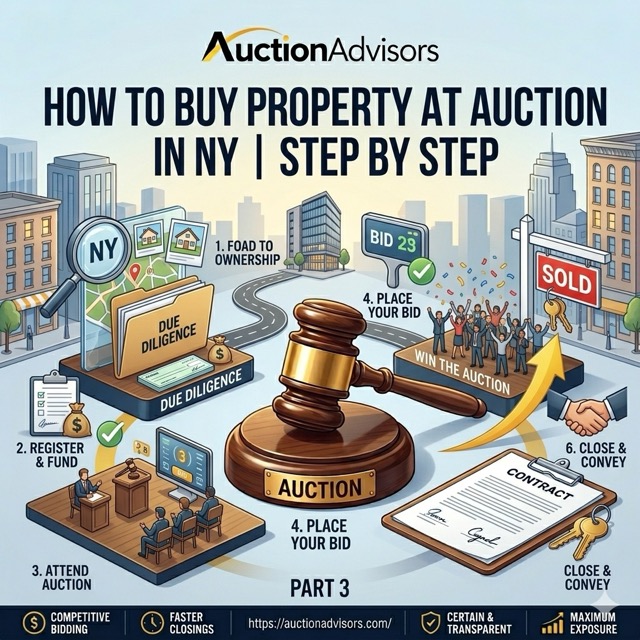
1. Understand How Real Estate Auctions Work in New York
Before participating in a real estate auction in NYC, buyers should first understand how auctions differ from ordinary real estate transactions. In a traditional sale, buyers often submit offers, negotiate terms, request contingencies, and work through a longer closing process. In an auction, most of the key terms are established before bidding begins. Buyers are expected to review the property, understand the auction rules, and be prepared to proceed if they are the successful bidder.
A real estate auction generally includes a marketing period, buyer registration, due diligence access, bidding, deposit submission, contract execution, and closing. The seller or auction firm sets the procedures in advance, including whether the sale is online, in person, sealed bid, or hybrid. Buyers should carefully review the terms before bidding because auction purchases may involve stricter timelines and fewer contingencies than traditional transactions.
New York auction opportunities can include residential properties, income-producing assets, development sites, and commercial buildings. Auction Advisors notes that its services include auctions and accelerated marketing, brokerage, advisory and valuations, and UCC foreclosure sales, reflecting the broader range of transaction types buyers may encounter.
2. Find Auction Properties for Sale in New York
Finding the right auction properties for sale is the first practical step in the buying process. Buyers should begin by monitoring reputable auction platforms, real estate auction firms, and current offering pages that publish available properties. Auction Advisors maintains a real estate offerings page where buyers can review current opportunities, including property descriptions, locations, status, and transaction details.
Where Buyers Can Search:
- Real estate auction company websites
- Current offering pages from auction firms
- Commercial property auction listings
- Buyer databases and email alerts
- Professional real estate networks
What to Look For:
- Property location and asset type
- Auction date or offer deadline
- Deposit requirements
- Sale terms and conditions
- Available due diligence documents
Buyers interested in Property Auction New York opportunities should also join buyer databases when available. Auction Advisors invites users to join its buyer database for email updates about the latest offerings and opportunities. This can help buyers learn about upcoming real estate auction opportunities before deadlines approach.
3. Review the Property Information Carefully
Once a buyer identifies a potential real estate auction in New York opportunity, the next step is to review all available property information. This may include property descriptions, photographs, title information, rent rolls, offering memoranda, tax records, zoning information, inspection details, and sale terms. Buyers should not rely only on the headline price or property summary. A successful auction strategy depends on understanding the full picture before bidding.
For example, Auction Advisors’ real estate listings may include property size, use type, occupancy information, location details, deposit requirements, and status updates. Their current offerings page shows different categories such as mixed-use, commercial, LLC membership interests, and equity interests, demonstrating that not every auction involves the same kind of asset or ownership structure.
Buyers should compare the property details with their investment goals. A residential building may require one type of analysis, while a commercial real estate auction may require review of tenant leases, operating expenses, zoning restrictions, redevelopment potential, and income history. The more complete the review, the more confident the buyer can be when deciding whether to register and bid.
4. Conduct Due Diligence Before Bidding
Due diligence is one of the most important steps in buying property at auction. Unlike traditional sales, auctions often require buyers to complete their review before bidding, not after winning. This means buyers must evaluate the property, legal documents, financial condition, and auction terms in advance.
Key Due Diligence Areas:
- Title search and lien review
- Property inspections, when available
- Zoning and permitted use analysis
- Lease and income review for rental properties
- Environmental or physical condition concerns
For Commercial Property:
- Tenant leases and rent rolls
- Operating expenses
- Building condition reports
- Local market demand
- Redevelopment or repositioning potential
Due diligence is especially important in New York because property values, local regulations, and transaction structures can vary significantly by borough, county, and asset type. A buyer considering a commercial real estate auction should evaluate both current income and future use potential. A buyer considering distressed or special-situation property should also understand whether any liens, legal restrictions, or sale conditions affect the transaction. Preparation before bidding helps reduce the risk of unexpected issues after winning.
5. Understand the Auction Terms and Conditions
Every property auction has its own terms and conditions, and buyers must understand them before placing a bid. These rules define how the auction will be conducted, what obligations the winning bidder accepts, how much deposit is required, whether financing contingencies are allowed, and when closing must occur. Failing to understand these terms can create serious problems after the auction ends.
Auction terms may include bidder qualification requirements, minimum bid increments, buyer premiums, required deposits, deadlines for signing contracts, and closing timelines. Some auctions may also require proof of funds or financing ability before allowing a buyer to participate. Others may involve court approval, lender approval, reserve pricing, or special sale conditions.
Auction Advisors’ real estate offerings may include notices, bid deadlines, deposit requirements, and links to additional documents, depending on the listing. Their site also shows that real estate offerings can involve different structures, including direct property sales and equity or membership interest transactions. Buyers should carefully distinguish between purchasing real estate directly and purchasing an ownership interest connected to real estate. Understanding the terms before bidding is essential to making an informed decision.
6. Arrange Financing or Proof of Funds in Advance
Financing must be addressed before participating in a real estate auction in NYC. Many auction transactions move quickly, and winning bidders may be required to submit a deposit immediately and close within a defined period. Buyers who wait until after the auction to arrange financing may face delays or risk defaulting under the auction terms.
Financing Preparation Steps:
- Speak with lenders before registering
- Confirm available cash for deposit requirements
- Obtain proof of funds or financing confirmation
- Understand closing costs and buyer premiums
- Prepare for a faster closing timeline
Why This Matters:
- Auctions often have limited contingencies
- Deposits may be non-refundable
- Closing deadlines are usually strict
- Sellers expect qualified bidders
For buyers pursuing auction properties for sale, financial readiness is not optional. A strong bidding strategy must be supported by the ability to close. This is especially true in commercial real estate auction transactions, where financing may involve more complex underwriting, appraisal review, and lender approval. Buyers should calculate the full acquisition cost, not only the winning bid amount.
7. Register for the Auction and Prepare to Bid
After completing due diligence and confirming financial readiness, the next step is registration. A buyer cannot simply show up and bid in many auction processes. Registration may require identity verification, acceptance of auction terms, proof of funds, deposit submission, or completion of bidder documents.
The registration process helps ensure that participants are serious and qualified. For sellers, this improves certainty. For buyers, it confirms access to the bidding process and clarifies the rules before the auction begins. In online auctions, buyers may also need to create an account, verify login access, and understand how the bidding platform works before the auction date.
Buyers should prepare a maximum bid strategy before bidding starts. Emotional bidding can lead to overpaying, especially in competitive New York markets. A disciplined buyer should establish a clear ceiling based on property value, repair costs, financing costs, closing expenses, and desired return. A professional real estate auctioneer manages the bidding process, but the buyer must remain responsible for their own numbers and risk tolerance.
8. Bid Strategically and Complete the Closing Process
Bidding at a real estate auction in New York requires discipline, preparation, and clear decision-making. Buyers should enter the auction with a defined maximum bid and avoid exceeding it unless there is a strong, calculated reason. Competitive bidding can move quickly, especially when multiple qualified buyers are interested in the same property.
Smart Bidding Tips:
- Know the maximum bid before the auction begins
- Track bid increments carefully
- Avoid emotional overbidding
- Consider the total acquisition cost, not only the bid price
- Stay focused on investment goals
After Winning:
- Submit the required deposit
- Sign the required purchase documents
- Coordinate with counsel, lender, and title professionals
- Meet all closing deadlines
- Confirm final funds and closing requirements
After the auction, the winning bidder must act quickly. The transaction moves from bidding to contract and closing, often with limited room for renegotiation. Buyers who prepare properly before the auction are better positioned to complete the closing smoothly. Those interested in current or future opportunities can review Auction Advisors’ real estate listings or contact the firm directly through its contact page.
Conclusion
Buying property at auction in New York can be a powerful way to access real estate opportunities, but it requires a structured and informed approach. The process is different from a traditional purchase because buyers must complete most of their analysis before bidding, understand the auction terms in advance, and be financially prepared to close quickly if successful.
A real estate auction offers transparency, speed, and access to unique opportunities, including residential properties, income-producing assets, redevelopment sites, and commercial real estate auction listings. However, the same features that make auctions efficient also make preparation essential. Buyers must evaluate the property, review documents, understand financing requirements, and develop a bidding strategy before participating.
In New York, where real estate values and transaction structures can be complex, working with experienced professionals is especially important. Auction firms, attorneys, lenders, inspectors, and title professionals all play important roles in helping buyers evaluate opportunities and complete transactions. For buyers looking to explore auction properties for sale, Auction Advisors provides current real estate offerings, buyer database updates, and contact options for learning more about available opportunities.
A successful auction purchase begins well before the bidding starts. Buyers who research carefully, prepare financing, understand the rules, and bid with discipline are better positioned to compete effectively and close with confidence.
FAQs
1. How do I buy property at auction in New York?
Start by finding available auction properties, reviewing the terms, completing due diligence, arranging financing, registering to bid, and following the auction rules through closing.
2. Do I need cash to buy auction properties for sale?
Not always, but buyers usually need proof of funds or financing approval before bidding. Many auctions also require a deposit immediately after the winning bid.
3. Can I inspect a property before a real estate auction?
In many cases, inspections or property tours may be available before the auction. Buyers should confirm access rules with the auction firm before bidding.
4. Is buying at a property auction risky?
It can involve risk if the buyer does not complete due diligence. Reviewing title, liens, property condition, auction terms, and financing requirements helps reduce exposure.
5. What happens if I win a real estate auction in NYC?
The winning bidder typically signs purchase documents, submits the required deposit, and proceeds toward closing according to the auction terms.
6. Are commercial real estate auctions different from residential auctions?
Yes. A commercial real estate auction often requires a deeper review of leases, income, expenses, zoning, tenant issues, and financing terms.
7. Can I back out after winning an auction?
Usually, auction bids are binding under the sale terms. Backing out may result in loss of deposit or other consequences, depending on the auction agreement.
8. Where can I find upcoming real estate auctions in New York?
Buyers can monitor auction firm websites, current offering pages, and buyer databases such as Auction Advisors’ real estate listings.
9. What is the role of a real estate auctioneer?
A real estate auctioneer manages the auction process, coordinates bidding, explains procedures, and helps conduct the sale according to established terms.
10. Is a real estate auction good for first-time buyers?
It can be, but first-time buyers should proceed carefully, review all documents, arrange financing early, and work with experienced professionals before bidding.