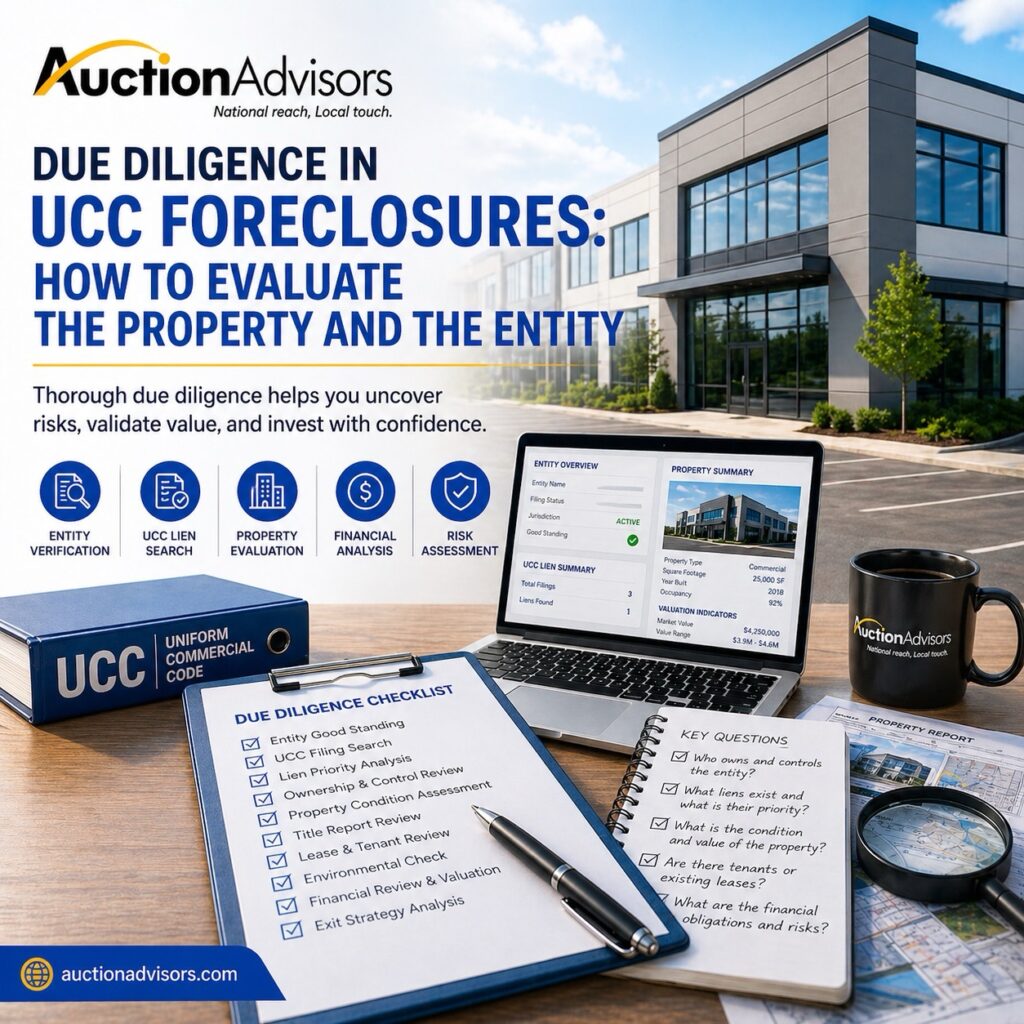
Due diligence in UCC foreclosure transactions requires a broader and more structured approach than traditional real estate acquisitions. Unlike standard transactions where a buyer acquires title to a property, a UCC foreclosure involves the purchase of ownership interests in an entity that holds the real estate. This distinction fundamentally changes the scope of analysis required prior to bidding.
As outlined in the source material, buyers are stepping into an existing ownership structure, assuming both the benefits and obligations tied to that entity. This means that due diligence must extend beyond evaluating the physical condition of the property to include a detailed review of the entity’s financial, legal, and operational status.
The complexity of this process is compounded by the limited protections typically available in UCC sales, including the absence of representations and warranties. As a result, buyers must rely on independent verification and structured analysis to identify potential risks. A comprehensive due diligence process is therefore essential to understanding the full scope of what is being acquired and the potential exposures associated with the transaction.
1. The Expanded Scope of Due Diligence in UCC Transactions
Due diligence in UCC foreclosure transactions is inherently broader than in traditional real estate deals because the acquisition involves both an asset and the entity that owns it. This dual-layer structure requires a comprehensive approach that integrates property-level, entity-level, and legal analysis.
In a conventional transaction, due diligence may focus primarily on title, physical condition, and zoning compliance. However, in a UCC foreclosure, these elements represent only one part of the evaluation. The buyer must also assess the internal structure of the entity, including its financial condition, governance framework, and outstanding obligations.
This expanded scope reflects the reality that the buyer is not acquiring a clean asset but rather an existing business structure with embedded risks. Each layer of due diligence contributes to a more complete understanding of the transaction. The absence of a title reset further emphasizes the need for a detailed review, as existing conditions continue after closing.
By addressing all relevant components, the due diligence process provides a framework for evaluating both the asset and the structure through which it is held.
2. Real Estate Due Diligence: Evaluating the Underlying Asset
Real estate due diligence remains a critical component of the evaluation process, even though the transaction involves the acquisition of an entity rather than direct title. The underlying property must still be analyzed to understand its condition, legal status, and market position.
Key Areas of Real Estate Review:
- Title reports and lien searches
- Survey and boundary verification
- Zoning compliance and land use restrictions
- Physical inspections and condition assessments
- Environmental evaluations
Purpose of Property-Level Analysis:
- To identify encumbrances affecting the asset
- To assess physical and operational condition
- To evaluate compliance with applicable regulations
As indicated in the PDF, these elements form the foundation of traditional real estate analysis but must be considered within the broader context of the entity structure. The findings from this review directly impact the valuation of the investment and inform how the property fits within the overall transaction.
3. Entity-Level Due Diligence: Understanding What Is Being Acquired
Entity-level due diligence is one of the most critical aspects of evaluating a UCC foreclosure. Because the buyer acquires ownership of the entity itself, this layer of analysis determines the financial and operational condition of what is being purchased.
This review includes examining the entity’s governing documents, financial records, and ownership structure. Buyers must understand how the entity is organized, who holds interests, and what obligations exist within the structure.
Key areas of focus include the operating agreement, which defines governance and decision-making authority, and financial statements, which provide insight into the entity’s performance and liabilities. The membership ledger and capital structure also play an important role in determining ownership rights.
This analysis ensures that the buyer has a clear understanding of the entity’s condition before acquiring it. Without this level of review, significant risks may remain unidentified, affecting both the value and viability of the investment.
4. Legal Due Diligence: Reviewing Structure and Compliance
Legal due diligence in UCC foreclosure transactions focuses on the structure and validity of the sale process, as well as the enforceability of the lender’s rights. This layer of analysis is essential to understanding whether the transaction has been conducted in accordance with applicable standards.
Key Legal Review Areas:
- Validity and perfection of the lender’s security interest
- Compliance with UCC foreclosure procedures
- Notice requirements and process execution
- Potential challenges from stakeholders
Purpose of Legal Analysis:
- To confirm that the lender has the right to foreclose
- To evaluate whether procedural standards were followed
- To identify risks of post-sale disputes
As noted in the PDF, failures in these areas may expose the transaction to challenges by borrowers or other parties. This makes legal due diligence an essential component of risk assessment, ensuring that the structure of the transaction supports the intended outcome.
5. Evaluating the Capital Stack and Debt Structure
Understanding the capital stack is a critical component of due diligence in UCC foreclosures. Because existing debt remains attached to the property, buyers must analyze all layers of financing associated with the asset.
This includes reviewing mortgage obligations, mezzanine debt, and any subordinate liens that may affect the investment. The relationship between these layers determines how cash flow is allocated and what obligations must be addressed after closing.
In many cases, the buyer is effectively acquiring the property subject to existing debt. This requires an evaluation of how that debt will be serviced, refinanced, or restructured. The terms of existing loans, including maturity dates and interest rates, also play a significant role in determining the feasibility of the investment.
A clear understanding of the capital stack ensures that the buyer can accurately assess the financial implications of the transaction. Without this analysis, the true cost of acquisition may be significantly understated.
6. Identifying and Assessing Hidden Liabilities
One of the most challenging aspects of due diligence in UCC foreclosures is identifying liabilities that may not be immediately visible. Because the buyer acquires the entity as-is, these liabilities remain in place after closing.
Common Hidden Liability Areas:
- Vendor and contractual obligations
- Pending or potential litigation
- Environmental exposure
- Tax deficiencies or compliance issues
Importance of Identifying These Risks:
- To prevent unexpected financial exposure
- To evaluate long-term operational impact
- To assess overall investment viability
The PDF emphasizes that buyers must independently verify the financial and operational condition of the entity. This requires a proactive approach to uncovering potential risks that may not be fully disclosed.
Because these liabilities can materially affect the value of the investment, their identification is a critical part of the due diligence process.
7. Time Constraints and Practical Challenges in Due Diligence
Due diligence in UCC foreclosure transactions is often conducted under time constraints that differ from traditional acquisitions. The structure of these sales may limit the amount of information available and the time allowed for review.
This creates practical challenges for buyers, who must make informed decisions based on incomplete data. The absence of a cooperative seller further complicates the process, as access to detailed information may be restricted.
Despite these challenges, the need for thorough analysis remains unchanged. Buyers must prioritize key areas of review and apply structured methodologies to evaluate risk within the available timeframe.
This environment requires both experience and discipline, as the ability to interpret limited information becomes an important factor in decision-making. The constraints of the process do not reduce the importance of due diligence; rather, they increase the need for a focused and efficient approach.
8. Integrating Due Diligence Findings into Investment Decisions
The final step in the due diligence process is integrating the findings into a comprehensive evaluation of the investment. This involves assessing how the identified risks and opportunities align with the buyer’s objectives and risk tolerance.
Key Integration Considerations:
- Impact of liabilities on projected returns
- Feasibility of addressing existing debt
- Ability to operate within governance constraints
- Alignment with investment strategy
Purpose of Integration:
- To form a complete view of the transaction
- To support informed bidding decisions
- To evaluate risk-adjusted value
By combining property, entity, and legal analysis, buyers can develop a structured understanding of the transaction. This approach ensures that decisions are based on a full assessment of both risks and potential outcomes.
The integration of due diligence findings is essential to determining whether a UCC foreclosure opportunity represents a viable investment under the specific circumstances.
Conclusion
Due diligence in UCC foreclosure transactions requires a comprehensive and multi-layered approach that reflects the complexity of acquiring an entity rather than a standalone asset. By extending analysis beyond the property to include entity-level and legal considerations, buyers can develop a complete understanding of what is being acquired.
As emphasized in the source material, the buyer is stepping into an existing structure with embedded risks and obligations. This makes thorough due diligence essential to evaluating both the opportunities and the potential exposures associated with the transaction.
A structured process that integrates all relevant factors provides the foundation for informed decision-making. Without this level of analysis, the risks inherent in UCC foreclosures may outweigh the potential benefits.
FAQs
1. Why is due diligence more complex in UCC foreclosures?
Because buyers acquire an entity, not just real estate.
2. What are the main areas of due diligence?
Property, entity, and legal review.
3. Why is entity-level diligence important?
It reveals liabilities and governance structure.
4. What is included in legal due diligence?
Review of lien validity and UCC compliance.
5. Do liabilities transfer to the buyer?
Yes, they remain within the entity.
6. What is capital stack analysis?
Review of all existing debt layers.
7. Are there time constraints in due diligence?
Yes, often more limited than traditional deals.
8. What are hidden liabilities?
Undisclosed obligations within the entity.
9. Can all risks be identified beforehand?
Not always, but structured diligence reduces exposure.
10. What is the goal of due diligence?
To fully understand the risks and value of the investment.