UCC real estate foreclosures represent a distinct approach to distressed asset transactions, one that differs fundamentally from traditional real estate foreclosure processes. Rather than transferring title to real property through a court-supervised proceeding, these transactions involve the sale of ownership interests in an entity that holds title to the underlying asset. This structure introduces a different set of considerations that must be evaluated carefully.
As highlighted in the source material, these opportunities are increasingly present in the distressed real estate market due to their speed and flexibility compared to judicial foreclosures. However, the same characteristics that make UCC foreclosures attractive also introduce additional complexity. Buyers are not simply acquiring property; they are stepping into an existing ownership structure with all associated obligations.
Understanding how these transactions function, what is actually being acquired, and how risk is embedded within the structure is essential before participating in a UCC foreclosure sale. A clear understanding of these elements provides the foundation for evaluating such opportunities in a structured and informed manner.
1. What Is a UCC Real Estate Foreclosure?
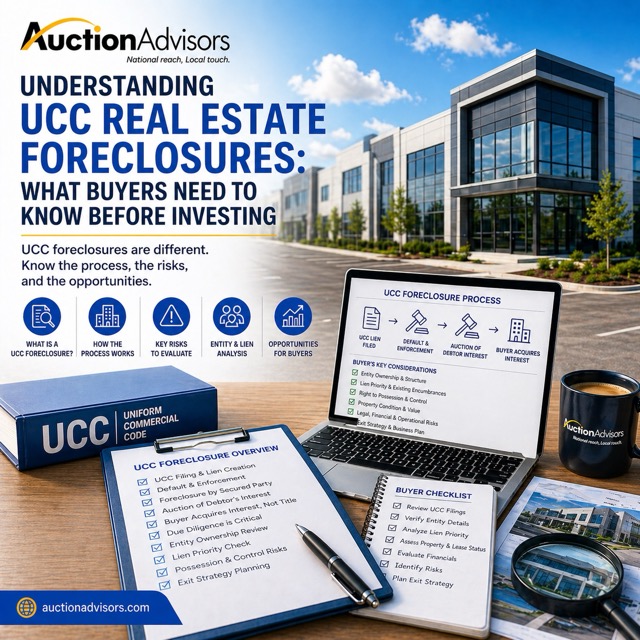
A UCC real estate foreclosure is not a foreclosure of real estate in the traditional sense. Instead, it is the enforcement of a lender’s security interest under Article 9 of the Uniform Commercial Code against personal property, specifically ownership interests in an entity such as a limited liability company (LLC). In many real estate structures, borrowers hold title to property through an LLC, and lenders take a pledge of the membership interests as collateral.
When a default occurs, the lender does not foreclose on the real estate itself. Instead, it forecloses on the pledged ownership interests in the entity. The result is a sale of equity interests rather than a transfer of property title. This distinction is central to understanding how these transactions operate.
This structure allows lenders to bypass traditional judicial foreclosure processes and conduct a sale privately or publicly under the UCC framework. While this creates efficiency in execution, it also changes the nature of what is being sold and how the transaction must be evaluated from a buyer’s perspective.
2. What Buyers Actually Acquire in a UCC Foreclosure
Understanding what is being acquired in a UCC foreclosure is essential to evaluating the transaction. The buyer is not purchasing real estate directly. Instead, the buyer acquires ownership interests in the entity that holds title to the property.
What the Buyer Typically Acquires:
- Full or partial membership interests in the LLC
- Indirect ownership and control of the underlying real estate
- All rights, obligations, and liabilities associated with the entity
Key Implications of This Structure:
- The buyer assumes the position of the prior owner
- There is no reset of financial or legal conditions
- Existing obligations remain attached to the entity
From a practical standpoint, the buyer steps into an existing structure exactly as it existed prior to the sale. As noted in the PDF, all financial, legal, and operational conditions continue after closing. This means the transaction must be evaluated both as a real estate investment and as an acquisition of an operating entity.
3. Why This Is Not a Traditional Real Estate Acquisition
One of the most important distinctions in a UCC foreclosure is that it does not result in a clean transfer of property title. Instead, ownership of the entity changes hands, while the real estate remains owned by that entity. This creates a fundamentally different risk profile compared to traditional real estate acquisitions.
In a typical foreclosure, certain liens may be extinguished, and the buyer may receive title subject to a defined set of encumbrances. In contrast, a UCC foreclosure does not eliminate existing obligations tied to the entity. These obligations remain in place after the transaction.
As a result, the buyer must evaluate not only the asset itself but also the legal and financial condition of the entity that owns it. This dual-layer analysis is a defining feature of UCC foreclosure transactions. The absence of a title reset requires a more comprehensive approach to underwriting, as the buyer inherits the entire structure rather than acquiring a newly conveyed asset.
4. Major Risks Buyers Must Understand
UCC real estate foreclosures involve several categories of risk that differ from those found in traditional real estate transactions. These risks arise from the structure of the transaction and the nature of what is being acquired.
Key Risk Areas:
- Existing mortgages remain in place
- Tax liens are not extinguished
- Judgments and encumbrances continue to attach
- The buyer assumes all entity-level obligations
Additional Considerations:
- The transaction is typically conducted on an “as-is, where-is” basis
- There are generally no representations or warranties
- Undisclosed liabilities may exist within the entity
As outlined in the PDF, the buyer is effectively acquiring a “subject-to” position, where existing debt must be addressed through servicing, restructuring, or refinancing. Failure to properly account for these obligations can significantly impact the overall value of the investment.
5. Entity-Level Risk: You Inherit the Entire Structure
A defining feature of UCC foreclosure acquisitions is that the buyer assumes ownership of the entity in its entirety. This includes both known and unknown liabilities. Unlike traditional transactions, there is typically no cooperative seller providing disclosures, indemnities, or contractual protections.
This means that the buyer may inherit a range of obligations, including vendor liabilities, litigation exposure, regulatory issues, and tax deficiencies. These risks are embedded within the entity and do not disappear as a result of the transaction.
The absence of customary protections requires a higher level of independent verification. Buyers must rely on their own diligence to understand the financial and legal condition of the entity. This makes entity-level analysis just as important as evaluating the underlying real estate, reinforcing the dual nature of these transactions.
6. Due Diligence Is Broader and More Complex
Due diligence in a UCC foreclosure extends beyond traditional real estate review. Because the buyer is acquiring an entity rather than a deed, the scope of analysis must include multiple layers of investigation.
Key Areas of Due Diligence:
- Real estate review (title, survey, zoning, physical condition)
- Entity-level analysis (operating agreements, financials, capital structure)
- Legal review (validity of pledge, compliance with UCC procedures)
Purpose of Expanded Due Diligence:
- To identify liabilities that survive the transaction
- To verify ownership and lien priority
- To evaluate the legal structure of the sale
The PDF emphasizes that a failure in any one of these areas can materially impact the investment. This broader diligence requirement reflects the complexity of UCC foreclosure transactions and the need for a comprehensive review process.
7. Sale Structure and Legal Process Considerations
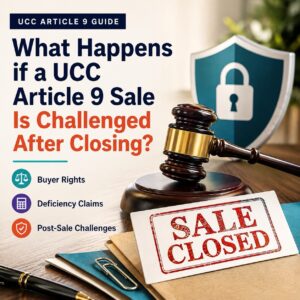
The structure of a UCC foreclosure sale introduces additional considerations related to notice, marketing, and procedural compliance. Under the UCC, the lender must conduct a commercially reasonable sale and provide notice to required parties.
These requirements are less prescriptive than court-supervised processes, but they remain critical to the validity of the transaction. If the sale is not conducted in accordance with these standards, it may be subject to post-sale challenges by borrowers, guarantors, or other stakeholders.
Such challenges can introduce uncertainty into the transaction and may affect the stability of the investment. This highlights the importance of evaluating not only the asset and the entity but also the process by which the sale is conducted. Understanding these procedural elements is an essential part of assessing risk in UCC foreclosure transactions.
8. Minority Interest Sales and Control Risk
Not all UCC foreclosure sales involve the transfer of full ownership. In some cases, the lender may foreclose on only a partial or minority interest in the entity. This creates a different set of considerations related to control and decision-making.
Risks Associated with Minority Interests:
- Lack of control over major decisions
- Continued influence of existing members
- Restrictions within operating agreements
Structural Limitations:
- Transfer restrictions
- Buy-sell provisions
- Rights of first refusal
- Manager-controlled governance
As noted in the PDF, acquiring a minority interest can result in economic exposure without operational control. This may lead to conflicts, limitations on strategy execution, or challenges in realizing value. Understanding the percentage interest being acquired and the rights associated with that interest is essential before participating in such a transaction.
Conclusion
UCC real estate foreclosures present a distinct type of investment opportunity that differs fundamentally from traditional real estate acquisitions. By structuring transactions around the sale of entity ownership rather than property title, these foreclosures introduce both efficiency and complexity.
The buyer is not acquiring a clean asset but is instead stepping into an existing legal and financial structure. This requires a comprehensive understanding of the entity, the asset, and the obligations that continue after the sale. As emphasized in the source material, success in these transactions depends on understanding the full context of what is being acquired.
A structured approach, grounded in thorough diligence and an understanding of market practices, provides the foundation for evaluating these opportunities. Without that understanding, the perceived benefits of speed and pricing may be offset by risks embedded within the structure.
FAQs
1. What is a UCC real estate foreclosure?
It is the sale of ownership interests in an entity that holds real estate, rather than a direct foreclosure of the property.
2. Does the buyer receive property title?
No, the buyer acquires ownership of the entity that holds title.
3. Are existing liens removed?
No, existing mortgages, liens, and obligations remain in place.
4. What is the biggest risk in these transactions?
The assumption of entity-level liabilities, including unknown obligations.
5. Is due diligence different from traditional real estate deals?
Yes, it includes both property-level and entity-level analysis.
6. What does “as-is, where-is” mean?
It means the buyer accepts the entity and asset without representations or warranties.
7. Can buyers acquire partial ownership?
Yes, some sales involve minority interests with limited control.
8. Why do lenders use UCC foreclosure?
It is faster, less expensive, and more flexible than judicial foreclosure.
9. Can these sales be challenged?
Yes, if procedural requirements are not met.
10. What is the key takeaway for buyers?
They are acquiring a legal structure with embedded risks, not just real estate.