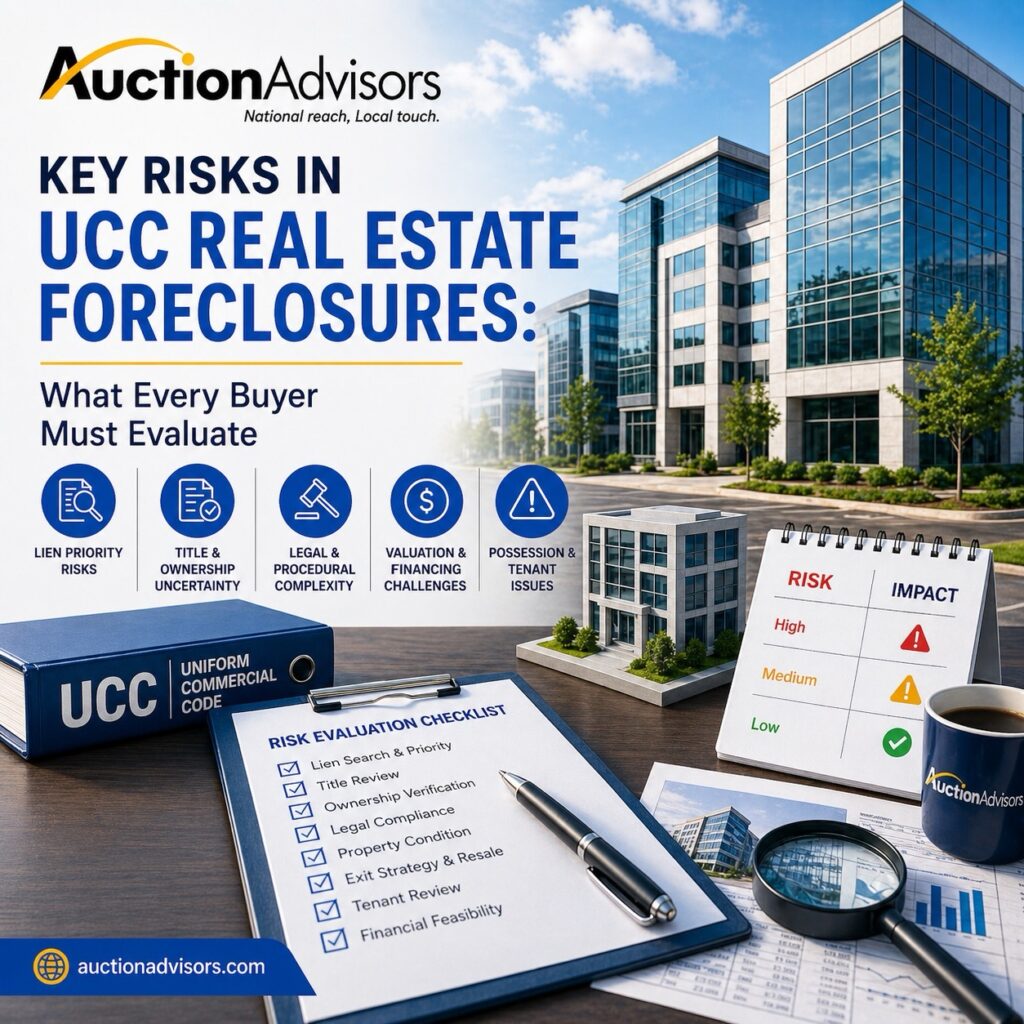
UCC real estate foreclosures present a unique set of risks that differ fundamentally from those encountered in traditional real estate transactions. While these opportunities may offer advantages such as speed and pricing flexibility, they also require a more comprehensive and disciplined approach to evaluation. The structure of a UCC foreclosure, where ownership interests in an entity are sold rather than the underlying real estate, introduces layers of complexity that must be carefully understood.
As emphasized in the source material, buyers are not acquiring a clean asset. Instead, they are stepping into an existing legal and financial structure that continues after the sale . This means that risks associated with the property, the entity, and the transaction process all remain relevant post-closing.
Understanding these risks is essential for evaluating whether an opportunity aligns with investment objectives. A structured approach to identifying and analyzing these risk factors allows buyers to assess not only the potential value of the asset but also the obligations and exposures that accompany it.
1. Existing Liens and Capital Stack Risk
One of the most significant risks in a UCC real estate foreclosure is the presence of existing liens and obligations that remain attached to the property. Unlike traditional foreclosure processes, where certain junior liens may be extinguished, a UCC foreclosure does not eliminate encumbrances on the underlying real estate.
Instead, the buyer acquires ownership of the entity that holds the property, and all existing financial obligations continue to exist after the transaction. This includes mortgages, tax liens, judgments, and other encumbrances that may affect the value and usability of the asset.
From a practical standpoint, this means that the buyer must evaluate the full capital stack associated with the property. The transaction is often structured as a “subject-to” acquisition, where the buyer assumes responsibility for addressing existing debt through servicing, refinancing, or restructuring.
Failure to fully understand the capital stack can significantly alter the economics of the investment. What may initially appear as an attractive purchase price can be offset by underlying obligations that require substantial additional capital or operational adjustments.
2. Entity-Level Liabilities and Hidden Exposure
A defining characteristic of UCC foreclosure transactions is that the buyer acquires the entity in its entirety, including both disclosed and undisclosed liabilities. This creates a level of exposure that differs from traditional real estate acquisitions, where liabilities may be more clearly defined or limited through contractual protections.
Common Entity-Level Liabilities:
- Outstanding vendor obligations
- Pending or threatened litigation
- Environmental or regulatory issues
- Unpaid taxes or compliance deficiencies
Key Implications:
- Liabilities remain attached to the entity after closing
- There are typically no representations or warranties
- Buyers must rely on independent verification
As noted in the PDF, the lender conducting the sale generally disclaims liability and sells on an “as-is, where-is” basis. This places the burden of identifying and evaluating risks entirely on the buyer.
Because some liabilities may not be immediately apparent, this risk category requires careful attention. The inability to identify hidden exposures prior to closing can result in unexpected costs and operational challenges that impact the overall value of the investment.
3. Absence of Traditional Transaction Protections
UCC foreclosure transactions differ from standard real estate transactions in that they typically lack many of the protections buyers may expect in negotiated deals. In a traditional acquisition, buyers often rely on representations, warranties, and indemnities provided by the seller to allocate risk and provide recourse in the event of undisclosed issues.
In contrast, UCC foreclosure sales are generally conducted without these protections. The selling party typically a lender does not operate as a cooperative seller and does not provide assurances regarding the condition of the asset or the entity. This results in a transaction environment where risk allocation is fundamentally different.
The absence of these protections requires buyers to take a more proactive approach to risk assessment. Rather than relying on contractual safeguards, buyers must identify potential issues through independent diligence and analysis. This shift places greater emphasis on pre-closing evaluation and increases the importance of understanding both the asset and the entity structure in detail.
4. Due Diligence Complexity and Information Gaps
Due diligence in UCC foreclosure transactions is broader and more complex than in traditional real estate deals. Because the buyer is acquiring an entity rather than a deed, the scope of analysis must extend beyond the physical property to include financial, legal, and operational aspects of the entity.
Key Due Diligence Areas:
- Real estate review (title, zoning, physical condition)
- Entity-level analysis (operating agreements, financial records)
- Legal review (validity of pledge, lien priority, compliance)
Challenges in Due Diligence:
- Limited access to complete information
- Time constraints associated with the sale process
- Potential gaps in historical documentation
As highlighted in the PDF, a failure in any one of these areas can materially impact the value of the investment. The complexity of due diligence requires a structured approach and an understanding that not all risks can be fully eliminated prior to closing.
This makes the evaluation process not only more detailed but also more dependent on informed judgment.
5. Structural Risk: Ownership Without Control
In some UCC foreclosure transactions, the lender’s collateral may consist of less than 100% of the ownership interests in the entity. This introduces the possibility that a buyer may acquire a minority interest rather than full control.
This scenario creates a distinct set of risks related to governance and decision-making. A minority interest holder may have limited ability to influence key aspects of the investment, including refinancing decisions, asset disposition, or operational strategy.
Without control, the buyer may be exposed to economic outcomes without the ability to direct the course of the investment. This can result in conflicts with other members or limitations on executing a business plan.
Understanding the percentage interest being acquired and the rights associated with that interest is essential. The presence of control restrictions within operating agreements further complicates this analysis, making it necessary to evaluate both ownership structure and governance provisions.
6. Operating Agreement and Governance Constraints
The operating agreement governing the entity plays a critical role in defining the rights and limitations associated with ownership interests. In UCC foreclosure transactions, these agreements may contain provisions that significantly affect control, transferability, and decision-making authority.
Common Governance Provisions:
- Transfer restrictions on ownership interests
- Buy-sell arrangements between members
- Rights of first refusal
- Manager-controlled governance structures
Impact on Buyers:
- Limits on the ability to transfer or sell interests
- Restrictions on major operational decisions
- Potential for disputes with existing members
These provisions can materially affect the value and flexibility of the investment. A buyer who does not fully understand the operating agreement may encounter limitations that were not initially apparent.
Evaluating governance structures is therefore a critical component of risk analysis. It ensures that the buyer understands not only what is being acquired but also how that ownership can be exercised in practice.
7. Procedural Risk and Potential Challenges
UCC foreclosure sales must be conducted in accordance with certain procedural standards, including notice requirements and the obligation to conduct a commercially reasonable sale. While these requirements are less formal than court-supervised processes, they remain essential to the validity of the transaction.
If these standards are not met, the sale may be subject to challenges from borrowers, guarantors, or other stakeholders. Such challenges can introduce uncertainty and may affect the stability of the ownership structure.
From a buyer’s perspective, this creates an additional layer of risk that must be considered during evaluation. The possibility of post-sale disputes highlights the importance of understanding how the transaction was conducted and whether procedural requirements were followed.
This risk underscores the need for careful review of the sale process, including notice, marketing, and execution, to ensure alignment with the expectations set forth under the UCC framework.
8. Risk Versus Opportunity in UCC Foreclosures
While UCC foreclosure transactions present multiple layers of risk, they also offer opportunities that may not be available through traditional acquisition channels. The efficiency and flexibility of the process can create situations where assets are made available under conditions that differ from conventional transactions.
Potential Advantages:
- Faster transaction timelines
- Reduced transaction costs
- Flexibility in the sales structure
- Access to distressed opportunities
Balancing Risk and Opportunity:
- Requires comprehensive diligence
- Demands understanding of entity structure
- Involves the evaluation of both assets and liabilities
As noted in the PDF, the efficiency of UCC foreclosures comes with reduced procedural protections, shifting more responsibility onto the buyer. This balance between risk and opportunity defines the nature of these transactions.
A structured approach to risk assessment allows buyers to evaluate whether the potential benefits align with the complexities involved, ensuring that decisions are based on a complete understanding of the transaction.
Conclusion
UCC real estate foreclosures present a distinct investment landscape characterized by both opportunity and complexity. The structure of these transactions, centered on the acquisition of entity ownership rather than property title- introduces risks that extend beyond traditional real estate considerations.
From existing liens and entity-level liabilities to governance constraints and procedural factors, each element must be evaluated within a broader framework. The absence of traditional protections further emphasizes the importance of independent analysis and due diligence.
As highlighted in the source material, success in these transactions depends on understanding the full scope of what is being acquired. By approaching UCC foreclosures with a comprehensive and structured evaluation process, buyers can assess both the risks and the opportunities in a balanced and informed manner.
FAQs
1. What is the biggest risk in UCC foreclosures?
The assumption of existing liabilities tied to the entity.
2. Are liens removed in UCC foreclosures?
No, liens remain attached to the property.
3. What does “as-is, where-is” mean?
The buyer accepts all risks without seller protections.
4. Can buyers face hidden liabilities?
Yes, undisclosed liabilities may exist within the entity.
5. What is a capital stack risk?
It refers to existing debt obligations that must be addressed.
6. Why is due diligence more complex?
Because it includes both property and entity-level analysis.
7. What happens in minority interest purchases?
Buyers may lack control over decisions.
8. Are there legal risks after the sale?
Yes, transactions can be challenged if procedures were not followed.
9. Why do lenders prefer UCC foreclosure?
It is faster and more flexible than judicial foreclosure.
10. How should buyers approach these deals?
With a structured, comprehensive evaluation of all risks.