
Fiduciary & Receivership

Court-Appointed Receivership in New Jersey, New York, Pennsylvania and Delaware

We serve as court-appointed receiver and fiduciary for real estate and businesses. We take control, preserve value, recover what is owed, and sell through a court-supervised sale process to maximize recovery for creditors.

Court-appointed receiver's desk with court documents and property keys

AuctionAdvisors serves as court-appointed receiver and court-appointed fiduciary for real estate and businesses in New Jersey, New York, Pennsylvania and Delaware. On appointment, we take control of the property or business, preserve and manage it, recover disputed or misappropriated assets, and sell assets through a court-supervised sale process to maximize recovery for creditors. As an independent third-party neutral, we report to the court, account for every dollar, and act for the benefit of all parties, not for any one side.

Why Lenders and Creditors Ask for a Receiver

Protect the assets

Stop waste, diverted income, fraud and mismanagement the day the receiver takes control.

Maximize recovery

A neutral fiduciary preserves value and sells through a court-supervised process to get the best result for creditors.

Keep the business running

Rents are collected, bills are paid and operations continue while the dispute is resolved.

How a Receivership Works

A receiver is a neutral officer of the court. Every step below happens under the court's order and supervision, from the day of appointment to the day the court discharges the receiver.

  1. AppointmentThe court enters an order naming the receiver and defining its powers. The receiver posts the required bond.
  2. Take controlWe take possession, secure the property or business, and take over bank accounts, rents and income.
  3. Preserve and manageWe operate the property or business, pay necessary expenses, and protect value while the case is pending.
  4. Recover assetsWe trace and recover assets that were transferred, concealed or misappropriated.
  5. Report to the courtWe file an inventory and regular accountings of every receipt and disbursement.
  6. SellWhen the court directs, we sell by auction or private sale through a transparent, court-supervised process.
  7. Distribute and closeThe court approves the final accounting, directs distribution to creditors, and discharges the receiver.

Day-One Possession: Our First Days After Appointment

Once the order is signed, we act at once. These are the typical first steps; the appointment order defines exactly what the receiver may do.

  • Secure the property or businessTake possession, change access where needed, and confirm insurance is in place.
  • Address safety and code issuesDeal with immediate hazards and code violations before they grow into liabilities.
  • Inventory every assetRecord real estate, equipment, vehicles, inventory, accounts and records: the basis for the court-required reporting.
  • Notify tenants, vendors and banksTell everyone the receiver is in control and where rents and payments now go.
  • Take control of all incomeMove rents and profits and other income into a receivership account, and start tracking every receipt and disbursement.
  • Brief the court and counselReport early findings, so the parties know the condition of the assets from the start.

Our Receivership Services

Court-Appointed Receivership

When a court appoints us receiver of real estate or a business, we act at once. We take possession, secure the property, collect rents and profits, manage operations, and preserve value while the case is pending. We follow the court's orders, report to the court, and account for all receipts and disbursements.

Asset Recovery

We find, secure, and recover disputed and misappropriated assets (real estate, business assets, equipment, vehicles, inventory, accounts and receivables) for the benefit of creditors. Where assets have been transferred or concealed, we trace them, take control of them, and bring them back into the estate for sale or distribution.

Property & Business Management During the Case

For the duration of the case, we manage the property or keep the business operating: collecting rents and revenue, paying necessary expenses, dealing with tenants and vendors, and preserving value pending the court's direction. We handle larger businesses, including companies with multiple locations.

Court-Supervised Sale & Liquidation

We sell receivership assets, real estate and businesses, by auction or private sale, as the court directs, and distribute the proceeds to creditors. As an auction and brokerage firm, we market the asset ourselves, run a transparent sale process, and report the result to the court.

Code Compliance & Environmental Cleanup

Distressed property often comes with problems that block a sale. We bring it into compliance with local ordinances and carry out environmental cleanup to meet regulatory standards, as we did for a nine-site digital billboard portfolio and for single-tenant retail property at 990 Spruce Street, so the property is safe, marketable and ready for buyers.

Our asset recovery process

Recovering assets that were moved, hidden or misappropriated is where receiverships are often won or lost. We run it as a defined process, under the court's order:

  1. FindSearch records, accounts, titles and locations to identify every asset of the estate, including assets transferred or concealed.
  2. SecureTake possession under the court's order (vehicles, equipment, inventory, accounts and receivables), so nothing else is lost.
  3. RecoverBring improperly transferred assets and funds back into the estate, working with counsel where claims are needed.
  4. Sell & distributeAppraise and sell through a court-supervised sale process, and pay out the proceeds as the court directs.

Who We Serve

Lenders and their counsel

Commercial banks, hard money lenders and hedge funds. When a loan goes bad (a borrower in default, a property in foreclosure, a business that can't service its debt), the court can appoint us receiver. We protect the collateral, collect rents and income, and sell through a court-supervised process so the loan is repaid.

Judgment creditors

When you hold a judgment and the debtor won't pay, the court can appoint us as a post-judgment receiver, also called a receiver in aid of execution. We take control of the debtor's property or business, preserve it, and sell it through a court-supervised process so the judgment is satisfied.

Attorneys and courts

Counsel petitioning for a receiver, and courts that need a neutral, experienced fiduciary. We provide what the appointment requires: immediate action on day one, regular reporting and accountings, and a sale process that holds up to the court's review.

Requesting a Receiver

For lenders and judgment creditors, a receiver changes who controls the asset while the case is pending. Here is what that means in practice, and what counsel typically prepares when applying.

Foreclosure alone vs. foreclosure with a receiver

Control of the property

Foreclosure aloneThe borrower stays in possession until the sale.
With a receiverA neutral receiver takes possession under court order.

Rents and income

Foreclosure aloneThe borrower may keep collecting, and income can be diverted.
With a receiverTenants pay the receiver, who accounts to the court for every dollar.

Condition and expenses

Foreclosure aloneMaintenance, insurance and taxes may lapse while the case runs.
With a receiverThe receiver maintains the property and pays necessary expenses.

Reporting

Foreclosure aloneThe lender has little visibility into the property.
With a receiverAn inventory and regular accountings are filed with the court.

Sale

Foreclosure aloneSheriff's sale at the end of the foreclosure.
With a receiverWhen the court directs, a court-supervised auction or private sale, actively marketed.

What counsel typically prepares when applying

  • The claim: the loan documents and the default, or the judgment and the failed collection efforts.
  • Why the assets need protection: evidence of waste, diverted rents, unpaid taxes or insurance, mismanagement, or assets at risk of being moved or lost.
  • A proposed order: the receiver's powers (possession, collecting rents, operating the business, hiring professionals, selling) and the reporting required.
  • The proposed receiver and the bond the court will set.
  • Who must get notice: the owner or debtor, lienholders and other interested parties.
  • Property and business details: addresses, leases and tenants, accounts, equipment and vehicles, locations.

General guidance only. Your counsel drafts the application under the rules of the court where you file. We can review the matter before filing and confirm we are able to act.

What We Handle

All types of real estate

  • Residential and multifamily
  • Office and retail
  • Special-purpose property
  • Vacant property that needs to be secured and monitored

Any type of business

  • Operating businesses, kept running during the case
  • Businesses winding down
  • Larger and multi-location companies
  • Restaurants, liquor licenses, equipment and vehicles

Service area

State and county courts throughout New Jersey, New York, Pennsylvania and Delaware.

  • New Jersey
  • New York
  • Pennsylvania
  • Delaware

Types of receiverships we handle

  • Statutory
  • Interim
  • Operating
  • Sequestration
  • Pendente lite
  • Ancillary
  • Custodial
  • Special
  • Friendly

Why AuctionAdvisors

We run the sale ourselves

Most receivers hire outside firms to sell. We are an auction and brokerage firm, and our principals are licensed brokers, so marketing and sale happen in-house, under one accountable fiduciary.

Asset recovery is our strength

Recovering assets that were moved, hidden or misappropriated is a large part of our success in receiverships, and often the difference in what creditors recover.

Built for larger matters

We take on larger businesses, including multi-location companies, not only single properties.

Trusted by other fiduciaries

Other court-appointed receivers and fiduciaries engage us to manage and sell estate assets for them.

Case Studies

Matters in which AuctionAdvisors and its owner, Oren Klein, served as court-appointed receiver, or managed and sold assets for another court-appointed fiduciary.

  • 7receiverships
  • 3sales for other fiduciaries
  • 3liquor license matters
Stage trailers, a pickup truck and motorcycles secured in an equipment yard Featured case Monmouth County, NJ
Receiver in aid of execution

This Is It Stageworks, LLC

Monmouth County, New Jersey

Receiver
Oren Klein, AuctionAdvisors
Appointed
October 24, 2025, by Hon. Thomas M. Comer, J.S.C.
Court
Superior Court of New Jersey, Monmouth County
Docket
MON-L-000636-25 · Brian Wander v. Scott Harrison and This Is It Stageworks, LLC
Assets
Stageline trailers, pickup trucks, motorcycles and other company equipment

As receiver in aid of execution of a judgment, the assignment was to find, possess, appraise and liquidate the company's assets to satisfy the judgment. The business was no longer operating, so the work centered on locating and recovering the assets and converting them to cash for the judgment creditor.


Digital billboard on a Raritan Township sign tower in New Jersey Court-appointed receiver

Digital Billboard Portfolio

Southern New Jersey

Assignment: Court-appointed receivership · Superior Court of New Jersey, Hunterdon County, Chancery Division

AuctionAdvisors was appointed receiver for a company that owned nine digital billboard sites throughout Southern New Jersey (WPC Billboard Lender, LLC v. Catalyst Outdoor Development, LLC, et al.). Our role was to maintain the properties, keep them in compliance with local ordinances, improve their marketability, and conduct the sale.

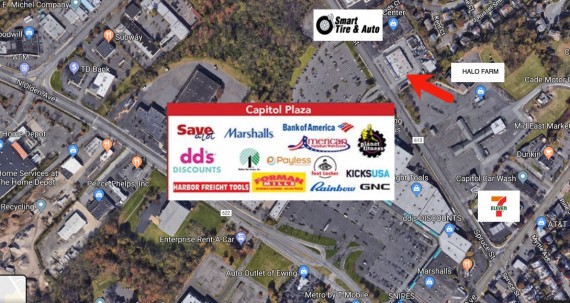
Aerial map of the Capitol Plaza area around 990 Spruce Street, Lawrence Township, NJ Receiver · pre-foreclosure

Single-Tenant Retail

990 Spruce Street, Lawrence Township, NJ

Assignment: Court-appointed receivership

AuctionAdvisors was appointed receiver for the property in anticipation of a foreclosure sale. We handled the eviction of the current tenants to clear the way for the sale, and carried out an environmental cleanup so the property met regulatory standards and was positioned well for buyers. The result was a smoother transfer of ownership and a more marketable property.

Cocktail glasses on a bar, illustrating a liquor license sale Receiver · liquor license

Liquor License

Trenton, NJ

Assignment: Court-appointed receivership

Appointed receiver in a liquor license case, to ensure compliance and run a fair, commercially reasonable sale. We reviewed the legal requirements and the license's status, set fair market value through a market analysis, and prepared the sale documents and an offering memorandum. After the sale, we obtained the court's approval of the transfer to the new owner and filed a final report documenting compliance and the sale process.

Commercial property preserved by a receiver during foreclosure Receiver · foreclosure

Gulf Coast Bank & Trust Co. v. Manfredo

Assignment: Court-appointed receiver during foreclosure

AuctionAdvisors served as receiver during the foreclosure process, protecting the lender's collateral and preserving its value until the foreclosure was completed.

Historic country inn and tavern, illustrating a restaurant and liquor license receivership Receiver · liquor license

Meyersville Inn

Meyersville, NJ

Assignment: Court-appointed receivership

AuctionAdvisors served as receiver for the Meyersville Inn, including handling the liquor license as part of the receivership.

Empty café and bar interior, illustrating a court-ordered restaurant and liquor license auction Auction, brokerage & management

Ossy's Café

Hawthorne, NJ

Assignment: Court-ordered auction for a special fiscal agent

In a court-ordered auction of the restaurant and its liquor license, AuctionAdvisors served as the auction and brokerage company and as the management company for the special fiscal agent.

Row of older multi-room houses sold as a single package in a receivership auction Auctioneers for the receiver

Rooming Houses Package

Assignment: Auctioneers for a court-appointed receiver

The court-appointed receiver engaged AuctionAdvisors as its auctioneers for a package of boarding houses, sold as a single package subject to state court approval.

Mid-century house of worship property managed and sold for a fiduciary Management & sale

Har Sinai Temple

Assignment: Property management, then sale for the fiduciary

AuctionAdvisors managed and preserved the property for a year, then conducted the sale for the fiduciary.

Receivership FAQ

Plain answers for lenders, creditors and attorneys. New Jersey rules are cited where they apply; procedure in New York, Pennsylvania and Delaware differs in places, and the appointing court's order always controls.

Receivership basics

What is a receiver?

A receiver is a neutral person appointed by the court to take control of a business or assets during a dispute, preserve their value, and sort things out fairly. The receiver acts on the court's instructions, not for either side.

What does it mean that a receiver is an "arm of the court"?

It means the receiver works for the court, not for the plaintiff or the defendant. The receiver follows the court's orders, reports back to the court, accounts for everything done, and stays neutral while protecting the property or business until the court says otherwise.

When is receivership used?

When there is a dispute over a business or property and the court needs someone neutral to step in and protect it. Common situations include a borrower in default, a property in foreclosure, a judgment the debtor won't pay, partners or owners who can't agree, and assets at risk of being wasted, lost or mismanaged.

Why do lenders ask for a receiver during foreclosure?

Foreclosure can take months. In the meantime, rents may go uncollected, the property may deteriorate, and the borrower may divert income. A receiver collects rents and income, pays necessary expenses, and preserves the collateral's value until the foreclosure is completed or the court orders a sale.

What types of businesses and properties benefit from a receivership?

Businesses with ongoing operations, income-producing property such as apartment buildings and retail centers, vacant properties that need to be secured and monitored, and assets in dispute, whenever keeping things stable protects value. The common thread is not the industry; it is that the assets need independent, court-supervised management.

What types of receiverships do you handle?

Statutory, interim, operating, sequestration, pendente lite, ancillary, custodial, special and friendly receiverships. A friendly receiver is appointed by consent of the parties, to help manage assets cooperatively while the dispute is resolved.

Does a receivership shut the business down?

No. A receiver can keep a business operating (collecting revenue, paying necessary expenses and dealing with employees, tenants and vendors) when that preserves value. Other receiverships wind a business down. The appointment order decides which, and the court can change course as the case develops.

Appointment and authority

Who can request a receiver?

Anyone with a legal interest in the property or business who can show the assets need protection. Most often that is a lender or secured creditor, a judgment creditor, a business partner, member or shareholder, or another party in a pending case. Asking for a receiver does not guarantee one will be appointed; the court decides.

How is a receiver appointed?

A party with a legal interest files a motion with the court. The other parties get a chance to be heard, and if the court agrees, it signs an order naming the receiver and spelling out exactly what the receiver can do. Before starting work, the receiver qualifies as the order requires (in New Jersey, that includes filing a bond with the Clerk of the Superior Court) and then takes possession under the court's supervision.

Can we propose AuctionAdvisors as receiver in our case?

Yes. The party applying for a receiver often proposes a candidate in its application, and the court decides whom to appoint. Contact us before you file: we will review the matter, confirm we can act, and provide what your application needs about our qualifications and the proposed scope of the receivership.

What authority does a receiver have?

The authority the appointment order gives, and no more. Typically that includes taking possession of the property or business, securing it, collecting rents and income, paying necessary expenses, operating the business, hiring professionals as the court allows, reporting to the court, and, when the court directs, selling assets and distributing the proceeds. Every significant step is taken under court supervision, for the benefit of the estate rather than one side.

Which states do you serve?

New Jersey, New York, Pennsylvania and Delaware. We handle receiverships for real estate of all types and for businesses, including larger and multi-location companies.

Do you sell assets for other receivers and fiduciaries?

Yes. Other court-appointed receivers and fiduciaries engage us as auctioneers, brokers and managers. For example, a package of rooming houses sold for a receiver, the Har Sinai Temple property managed and sold for a fiduciary, and Ossy's Café, where we were the auction, brokerage and management company for the special fiscal agent.

Who pays the receiver?

The receiver's fees and the costs of the receivership are paid from the estate (the property's income and the sale proceeds), and they come first in the order of payment. The court reviews and fixes the fees of the receiver and the professionals it hires, as part of approving the receiver's accounting.

What happens to tenants and leases?

Tenants are notified of the appointment and pay rent to the receiver instead of the owner. The receiver collects rents, handles tenant issues and maintenance, and keeps the property running under the court's order, accounting to the court for all income and expenses.

How a receivership ends

How long does a receivership last?

There is no set timeline. Some receiverships wrap up in a few months once the immediate problems are handled; others take longer, sometimes years, while assets are sold and disputes are resolved. New Jersey sets no fixed deadline; the appointment order and the court control the timing.

How does a receivership end?

Not when the last asset is sold; it ends by court order. The usual close-out runs in this order:

  1. The purpose is completed: assets are sold (a sale free and clear of liens needs court approval, on notice to lienholders) or the dispute is resolved.
  2. The receiver files a final accounting, and interested parties get notice and a chance to object.
  3. The court approves the accounting and fixes the fees of the receiver and the professionals.
  4. The remaining funds are distributed as the court directs.
  5. The court discharges the receiver, and the bond is released as part of that order.
Can a receiver sell property free and clear of liens?

Yes, with the court's approval. A sale free and clear of liens needs a court order entered on notice to the lienholders. The liens then attach to the sale proceeds, which are paid out as the court directs.

What is the receiver's final accounting?

It is the receiver's sworn, complete financial record of the receivership: what the estate held, everything collected, everything spent, and what is left and how it is held. In New Jersey, a receiver files a sworn inventory within three months of appointment and then an account every April 1 and October 1. The accounts are audited, interested parties can file written exceptions, and only when the court approves the final account can the receiver be discharged (N.J. Court Rule 4:53-7).

Who gets paid, and in what order?

The court decides. For an insolvent corporation, New Jersey law (N.J.S.A. 14A:14-21) sets the order:

  1. The costs and expenses of the receivership.
  2. Liens, in their lawful order of priority.
  3. Certain wage claims: up to $600 per worker, for work within three months before the receivership began.
  4. General creditors, in proportion to what they are owed.
  5. Any surplus, to the stockholders.

For custodial and rent receiverships there is no statutory claims process; distribution follows the appointment and sale orders and lien priority, case by case.

What happens to the receiver's bond?

The receiver posts a bond before starting work, in an amount the court sets, as a guarantee of faithful performance. It stays in place until the work is finished, the accounting is approved and the money is paid out, and it is released as part of the court's discharge of the receiver.

When is the receiver formally discharged?

Only by court order, after the final accounting is approved. In New Jersey the same order approves the final account and discharges the receiver. It typically allows the final fees, confirms or directs the final payments, ends the receivership, deals with the bond, and may authorize destroying old records. Notice to creditors matters: in Parke Bank v. Voorhees Diner Corp. (2024), the Appellate Division reversed a discharge granted without creditor notice, an inventory and an approved final accounting.

AuctionAdvisors protects assets, maximizes value, distributes proceeds equitably, and meets every obligation to the court.

Need a receiver in NJ, NY, PA or DE?

Talk to us before you file. We'll review the matter and tell you how we would approach the receivership.

Scroll to Top